Samuel Huntington’s most famous and controversial book is "The Clash of Civilizations and the Remaking of World Order" (1996). This work builds on his 1993 Foreign Affairs article of the same name, where he argued that the post-Cold War world…
Lire la suite...
lun le 8 déc.
Samuel Huntington and the Paradox of Multiculturalism: Global Diversity vs. National Unity
Samuel Huntington advocated for a form of global multiculturalism while championing cultural unitarism at the national level. This perspective, which values global diversity, stood in stark contrast to the interventionist policies of the George W. Bush era (2001–2009), marked by…
Lire la suite...
mer le 3 déc.
Who were The Canaanites ?
The Canaanites were an ancient people who lived in the Levant region (modern-day Lebanon, Israel, Palestine, Jordan, and parts of Syria) during the Bronze Age (approximately 3000–1200 BCE). They are best known from the Hebrew Bible (Old Testament), where…
Lire la suite...
lun le 1 déc.
Was ABRAM (ABRAHAM) a sumerian ?
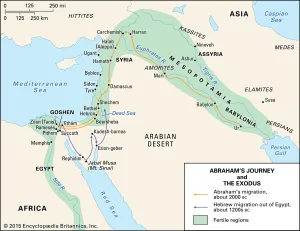
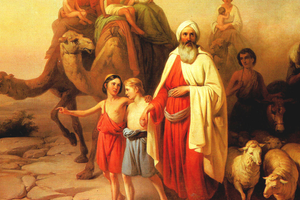
The figure Abram (later known as Abraham in the biblical tradition) is traditionally associated with the city of Ur, which was a major Sumerian city-state in Mesopotamia. According to the Book of Genesis in the Hebrew Bible, Abram was…
Lire la suite...
lun le 1 déc.
The cradles of civilization
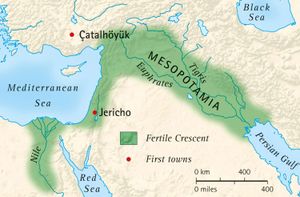
1. Sumer (3500–2000 BCE)
The Sumerians invented cuneiform, the world’s first writing system, and built the first cities like Ur and Uruk. They created advanced mathematics, architecture, and the wheel, laying the foundation for Mesopotamian…
Lire la suite...
ven le 28 nov.
Is there mention of Muhammad or Islam during the first arab invasion ?
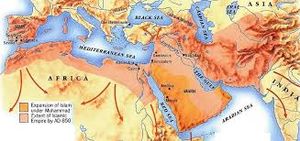
During the first Arab invasions of the Byzantine Levant (630s–640s CE), there is no direct mention of Muhammad or Islam by name in contemporary Byzantine or Jerusalemite sources from the time of the conquest. Here’s what the historical record shows:
…Lire la suite...
mar le 25 nov.
Did Mecca exist at the time of Mahomet ?
If Mecca was indeed a major trading capital in pre-Islamic Arabia, as described in later Islamic sources (including the Hadith), why is it so rarely mentioned in the records of the great contemporary civilizations—Persians, Romans, Greeks, Nabataeans, and others?
Here’s…
Lire la suite...
lun le 24 nov.
Is Islam violent in the muslim-majority countries ?
1. The "Misunderstood Islam" Narrative
Many Muslims and apologists argue that Islam is peaceful at its core and that violence, extremism, and human rights abuses are distortions caused by:
- Political manipulation (e.g., dictatorships, colonialism, Western interventions).
- Extremist groups (e.g., ISIS…
lun le 24 nov.
Why Islam Struggles to Reform Like Christianity
1. Fundamental Textual Differences
New Testament (NT):
- Focuses on ethics and spirituality (e.g., "Love your enemies," Matthew 5:44).
- No calls for holy war, slavery, or corporal punishment.
- Slavery is not legitimized (Paul’s letters encourage kindness, Philemon 1:16).
- Easier to align…
lun le 24 nov.
Is islam a religion of peace ?
The tension between the absolute exemplarity of the Prophet Muhammad (as presented by the Quran and Islamic tradition) and modern ethical norms, as well as the political and social consequences of this…
Lire la suite...
jeu le 6 nov.
Jordan story - The real Palestine
The Land of Time: Jordan’s Ancient Roots
Jordan is a palimpsest of history, its layers written in stone and sand. Long before the rise of empires, the land was home to hunter-gatherers and early farmers. By 3000 BCE, the fertile…
Lire la suite...
jeu le 23 oct.
Was the Armenian Genocide (1915–1923) perpetrated ?
The Armenian Genocide (1915–1923) was perpetrated by the Ottoman Empire’s Young Turk government for a combination of ideological, political, and wartime reasons. Here are the key factors that led to the genocide:
1. Nationalism and Turkification
- The Young Turk movement…
jeu le 23 oct.
What was the relations between Mohammad Amin al-Husayni, the Grand Mufti of Jerusalem and Himmler ?
Mohammad Amin al-Husayni, the Grand Mufti of Jerusalem, had a close and collaborative relationship with Heinrich Himmler, the head of the SS and one of the main architects of the Holocaust.
Key Points of Their Relationship:
- Meetings: Al-Husayni…
jeu le 23 oct.
What were the borders of the British Mandate (1920–1948)?
The borders of the British Mandate of Palestine (1920–1948) were defined as follows:
- West: The Mediterranean Sea
- North: The French Mandates of Lebanon and Syria (the border was set by the Paulet–Newcombe Agreement of 1920)
- East: The British Mandate…
jeu le 23 oct.
The 1948 Arab–Israeli War, known in Israel as the War of Independence
The 1948 Arab–Israeli War, known in Israel as the War of Independence (Hebrew: מלחמת העצמאות, Milhemet Ha'atzma'ut) and in the Arab world as the Nakba (Arabic: النكبة, "the catastrophe"), was the first major conflict between Israel and the Arab…
Lire la suite...
mer le 22 oct.
What is the green line ?
The "Green Line" is the demarcation line that separated Israel from the West Bank (including East Jerusalem) and the Gaza Strip from 1949 until the 1967 Six-Day War. Its creation marked the end of the 1948 Arab-Israeli War and shaped…
Lire la suite...
mer le 22 oct.
Could the principle of uti possidetis juris be considered in relation to the boundaries of the British Mandate for Palestine ?
The principle of uti possidetis juris could, in theory, be considered in relation to the boundaries of the British Mandate for Palestine as they existed at its termination in 1948. However, its application is highly debated and not straightforward. Here’s…
Lire la suite...
mer le 22 oct.
The story of the West Bank from the perspective of international law
The story of the West Bank from the perspective of international law is complex, contentious, and deeply intertwined with historical events, United Nations resolutions, treaties, and legal opinions. Here’s a concise overview, focusing on key legal milestones and interpretations:
1.
…Lire la suite...
jeu le 16 oct.
What is Boko Ahram ?
The story of Boko Haram is complex and rooted in both local Nigerian dynamics and broader ideological currents. Here’s a concise overview based on the most reliable sources:
Origins and Early Years
Boko Haram was founded in 2002 in Maiduguri…
Lire la suite...
jeu le 16 oct.
The Deir Yassin battle (1948)
The events took place on April 9, 1948, during the civil war in Palestine. At that time, the country was still under British authority, although the British had begun their withdrawal from the region in February, with a full retreat…
Lire la suite...
jeu le 16 oct.
The Hebron Massacre in 1929
The Hebron massacre of 1929 was a pivotal and tragic event during the British Mandate for Palestine. On August 23–24, 1929, Arab mobs attacked the Jewish community in Hebron, killing 67 Jews and wounding many more. The violence was part…
Lire la suite...
lun le 6 oct.
Did egypt governed gaz ?
Egypt has never governed Gaza in the modern sense, but its relationship with the territory has evolved significantly over time. Here’s a concise breakdown:
Historical Context
Ottoman Era (1517–1917) Gaza was part of the Ottoman Empire, administered as part of…
Lire la suite...lun le 6 oct.
1948 partiion plan : which side got the "best" par ?
The 1948 UN Partition Plan allocated land in a way that was highly controversial—and the question of which side got the "best" part depends on perspective. Here’s an objective breakdown of the key advantages and disadvantages for each side:
…Lire la suite...
jeu le 25 sept.
A history of the Muslim Brotherhood
The Call in the Shadows (1928)
It begins in the Egyptian canal city of Ismailia, where a young teacher, Hassan al-Banna, gathers six workers in a small apartment. They are disillusioned: Britain controls their land, Western culture is…
Lire la suite...