

Odon Lafontaine’s theory on the origin of Islam challenges the traditional narrative through a multidisciplinary approach, combining history, archaeology, linguistics, and textual analysis. His research, most notably presented in The Great Secret of Islam, proposes the following key arguments:
Core Tenets of Lafontaine’s Theory
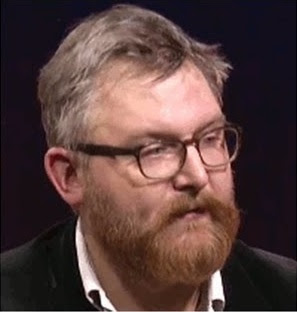
Mecca’s Non-Existence in the 7th Century
Lafontaine argues that Mecca, as described in Islamic tradition, did not exist as a major settlement during the 7th century. Archaeological and logistical evidence suggests the site lacked the infrastructure (water, trade routes, or political backing) to sustain a thriving city. Instead, he posits that the Quran’s geographical references—long assumed to point to Mecca—originally described Jerusalem. Many descriptions in the Quran (e.g., a "sanctuary" with a temple, a sacred stone, and a well) align more closely with Jerusalem than with Mecca, implying a later reinterpretation of the text to shift its focus to the Arabian Peninsula.
Early Islam as a Judeo-Christian Movement
Lafontaine contends that early Islam emerged from a Judeo-Christian context, deeply rooted in apocalyptic beliefs shared by Jewish and Christian communities in the Near East. The Quran, in its earliest form, may have been a pre-Islamic Christian hymnal or liturgical text, later reinterpreted to fit an Arab political agenda. His work identifies hidden Christian and Jewish themes in the Quran, including references to Jesus, Mary, and biblical prophets that were gradually obscured by Islamic reinterpretations between the 8th and 11th centuries.
Political Reshaping by Arab Rulers
The transformation of this movement into what we now recognize as Islam was driven by Arab rulers and caliphs (particularly the Umayyads) who reworked religious narratives to legitimize their power. By framing their rule as a "reign of God" (caliphate), they consolidated political and religious authority, gradually replacing the original Judeo-Christian elements with an Arab-centered narrative. This process involved:
- Replacing Jerusalem with Mecca as the holy city.
- Reinterpreting the Quran to align with Arab tribal identity.
- Creating a new prophetic figure (Muhammad) to serve as the focal point of the religion, possibly based on earlier figures (e.g., a 6th-century Ethiopian or Arabian leader named "MHMD").
Linguistic and Textual Evidence
Lafontaine’s analysis of the Quran’s word roots, themes, and syntax reveals layers of meaning that predate Islamic interpretations. For example:
- The Quran’s original language may have been a mix of Aramaic (see below), Syriac (see below), and Arabic, reflecting its Judeo-Christian origins.
- Key terms (e.g., Allah, Masjid, Hajj) have pre-Islamic meanings tied to Christian or Jewish practices.
- Variant readings (qira’at) of the Quran suggest earlier versions of the text that were later standardized to fit the Islamic narrative.
Historical Revisionism
Lafontaine argues that the standard Islamic account of Muhammad’s life and the early Muslim community was largely constructed in the 8th and 9th centuries, long after the events it describes. This revisionism served to:
- Unify Arab tribes under a single religious identity.
- Distance Islam from its Judeo-Christian roots to avoid subordination to existing monotheistic traditions.
- Legitimize the caliphate as a divine institution.
Supporting Evidence
Lafontaine’s theory draws on:
- Archaeological gaps: No 7th-century inscriptions or coins mention Mecca or Muhammad as a prophet.
- Numismatic and epigraphic findings: Early Islamic coins and inscriptions (e.g., the Dome of the Rock) initially referenced Jerusalem and Jesus, not Mecca or Muhammad.
- Comparative religion: Parallels between the Quran and Syriac Christian texts (e.g., the Diatessaron or Liturgies of the Nestorian Church).
- Geographical inconsistencies: The Quran’s descriptions of trade routes, climate, and topography better match Jerusalem or Petra than Mecca.
Conclusion: A "Silent Revolution" in Islamic Studies
Lafontaine’s work is part of a broader revisionist school in Islamic origins research (e.g., Patricia Crone, Michael Cook, Karl-Heinz Ohlig) that challenges the traditional timeline and geography of Islam’s emergence. His central claim is that Islam, as we know it today, is the result of a centuries-long process of political and theological reconstruction, not a sudden revelation in 7th-century Arabia. This "great secret" remains controversial but is increasingly supported by cross-disciplinary scholarly findings.
Key Sources:
- The Great Secret of Islam (Odon Lafontaine, 2020–2024 editions)
- thegreatsecretofislam.org
- Collaborations with scholars like Édouard-Marie Gallez (EEChO research group).
The Syriac people (also known as Syriacs, Assyrians, or Arameans) are an ethnic and religious community with deep historical roots in the Middle East, particularly in Syria, Iraq, Turkey, and Lebanon. They are known for their unique language, Christian heritage, and cultural identity, which have survived for nearly 2,000 years despite persecution, displacement, and assimilation pressures.
The Arameans are an ancient Semitic people whose history, language, and culture have profoundly shaped the Near East for over 3,000 years. Their legacy is deeply intertwined with the Bible, the rise of empires, and the spread of Aramaic—a language that became the lingua franca of the ancient Middle East, even influencing Hebrew, Arabic, and Syriac. Today, the Arameans are both a historical civilization and a modern ethnic group, though their identity is often debated, overlapping with Assyrians, Syriacs, and other Semitic peoples.