

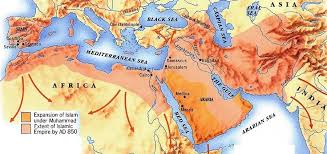
During the first Arab invasions of the Byzantine Levant (630s–640s CE), there is no direct mention of Muhammad or Islam by name in contemporary Byzantine or Jerusalemite sources from the time of the conquest. Here’s what the historical record shows:
1. Byzantine and Jerusalemite Sources
- No Immediate Recognition: The earliest Byzantine accounts of the Arab invasions do not refer to the invaders as "Muslims" or mention Muhammad. Instead, they often describe the Arabs as "Saracens" (a generic term for Arab tribes) or "Ishmaelites" (a biblical reference), and sometimes as "Muhajirun" (emigrants) or “Hagarenes”
- Religious Identity Unclear: The Byzantines initially saw the Arab invasions as another tribal uprising or a continuation of the Arab-Byzantine frontier conflicts. The religious dimension of the conquests—Islam—was not immediately recognized or emphasized in Byzantine texts. The first clear references to Islam and Muhammad in Byzantine sources appear decades later, not during the initial conquest
- Jerusalem’s Surrender (637 CE): The surrender of Jerusalem to the Arab forces under Caliph Umar is recorded in both Muslim and later Christian sources, but the contemporary Christian accounts (such as those by the Patriarch Sophronius) do not mention Muhammad or Islam. The focus is on the political and military aspects, not the religious identity of the conquerors
2. Muslim Sources
- Later Narratives: Muslim historical and religious texts, written down in the 8th and 9th centuries, describe the conquests as part of the spread of Islam and attribute the victories to the faith inspired by Muhammad. However, these are retrospective accounts, not contemporary records
- Public Display of Islam: There is little evidence of public Islamic symbolism (such as references to Muhammad or the Quran) in official documents or coinage until the late 7th century, during the reign of Caliph Abd al-Malik (685–705)
3. Why the Silence?
- Early Islam’s Development: Islam as a distinct religious and political identity was still consolidating during the conquests. The Arab armies were united more by tribal and political loyalty than by a fully formed religious ideology at the outset.
Tom Holland point of view
Tom Holland, the British historian and author, has expressed controversial views about the early history of Islam and the role of Mecca. In his documentary Islam: The Untold Story and his book In the Shadow of the Sword, Holland argues that there is little contemporary historical evidence for the traditional Islamic account of Mecca as the birthplace of Muhammad and the cradle of Islam. He suggests that Mecca may not have been the original center of Islam and that the city’s prominence was emphasized later, possibly under the Umayyad Caliphate, to give Islam a more distinctly Arabian origin and distance it from Jewish and Christian influences
Holland’s arguments are based on the lack of mention of Mecca or Muhammad in datable texts until decades or even a century after Muhammad’s death, and he questions how a fully developed monotheistic religion could emerge in such isolation from the major centers of the late antique Near East. He also speculates that the true origins of Islam might be further north, possibly in the region of modern-day Syria or Palestine, rather than in the Hijaz
Key Points of Holland’s View:
- Mecca is not mentioned in any datable text related to Muhammad until over a century after his death.
- The traditional narrative of Islam’s origins may have been shaped or even invented later for political and religious reasons.
- The geographical and cultural isolation of Mecca makes its sudden emergence as the center of a major monotheistic religion puzzling to historians.
Criticism and Context:
- Holland’s views are highly controversial and have been criticized by both Muslim scholars and some Western academics for relying on speculative theories and for his lack of expertise in the relevant languages and primary sources
- Many historians argue that Holland’s skepticism goes beyond the evidence and that he underestimates the reliability of early Islamic oral and written traditions
In summary, Tom Holland is skeptical of the traditional account of Mecca’s role in early Islam, suggesting that the city’s importance was retroactively emphasized and that the origins of Islam may lie elsewhere. His views are part of a broader debate among historians about the early history of Islam and the reliability of its sources.