
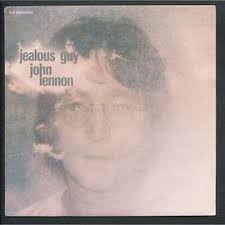
"Jealous Guy" is one of John Lennon’s most iconic and emotionally raw songs, originally released on his 1971 album Imagine. Its story is deeply personal and reflects Lennon’s struggles with jealousy, regret, and self-awareness—both in his life and his relationship with Yoko Ono.
Origins and Inspiration
Early Version: The song was first written in 1968 during The Beatles’ retreat in Rishikesh, India, under the title "Child of Nature." This early version was more abstract and nature-themed, but Lennon later reworked it into the confessional "Jealous Guy" after his relationship with Ono faced turmoil. By 1971, Lennon was grappling with the aftermath of The Beatles’ breakup and his own insecurities. The lyrics—"I was dreaming of the past / And my heart was beating fast / I began to lose control"—capture his vulnerability and the pain of realizing how his jealousy had hurt Ono.

Lyrical Meaning
The song is a direct apology to Ono, acknowledging Lennon’s possessiveness and the damage it caused: "I didn’t mean to hurt you / I’m sorry that I made you cry" reflects his remorse. The chorus, "I was just a jealous guy," is a raw admission of his flaws, framed by the haunting melody that underscores the song’s emotional weight.
Musical Style
Simplicity and Power: The track features a sparse arrangement—piano, strings, and Lennon’s tender vocals—which amplifies its intimacy. Phil Spector’s Influence: Produced by Phil Spector, the song’s lush, melancholic sound became a hallmark of Lennon’s solo work.
Legacy
"Jealous Guy" is often regarded as one of Lennon’s finest solo compositions, praised for its honesty and musical elegance. It has been covered by numerous artists, including Roxy Music, whose 1981 version introduced the song to a new generation. The song’s themes of love, regret, and self-reflection continue to resonate, making it a timeless piece in Lennon’s catalog.
Connection to Yoko Ono
The song is a window into Lennon and Ono’s complex relationship. Ono’s influence on Lennon’s life and art is undeniable, and "Jealous Guy" serves as both an apology and a testament to their bond—flaws and all.