
The story of the writing and recording of Abbey Road, one of The Beatles’ most iconic and beloved albums, is full of drama, creative breakthroughs, and tension. Released in 1969, Abbey Road was the band’s 11th studio album, and it marked the final time the Fab Four recorded together as a group (though their breakup was still a year away). The album is widely regarded as a high point of their musical career, blending innovative production with memorable melodies and an enduring sense of artistic ambition.
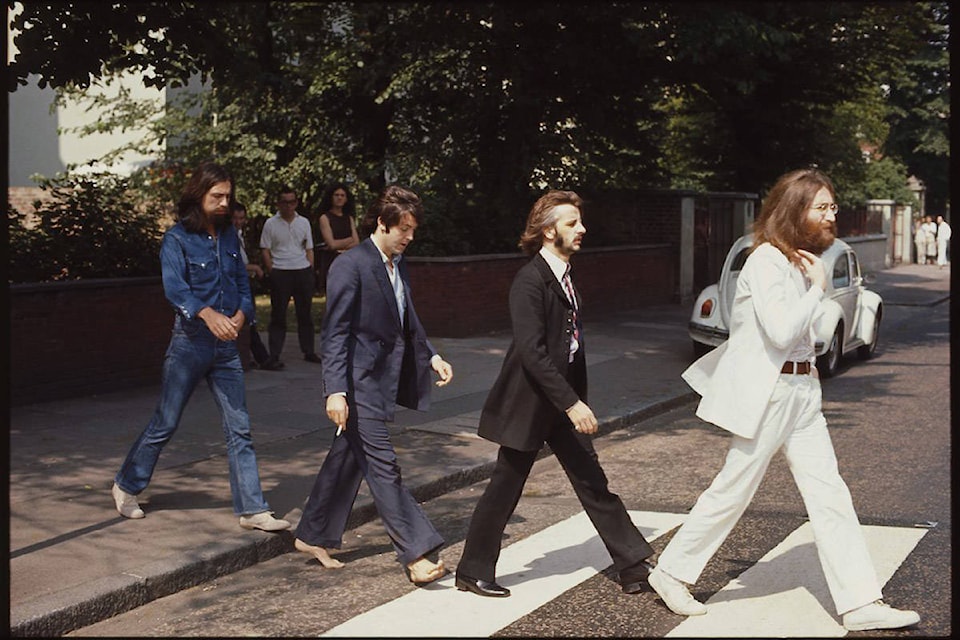
By the time The Beatles began working on Abbey Road in 1969, their internal relationships were already strained. John Lennon, Paul McCartney, George Harrison, and Ringo Starr were experiencing personal and professional tensions, many of which had started during the recording of The Beatles’ (White Album) in 1968. The band was drifting apart, with each member increasingly focusing on personal projects. Lennon had become more distant, involved with Yoko Ono and experimenting with avant-garde music, while McCartney was trying to hold things together musically. Harrison was growing frustrated with the limited space he had for his songwriting, and Starr even temporarily left the band during the White Album sessions, only to return later.
Despite these tensions, the band came together in the spring of 1969 to start work on their next album. Initially, the album wasn’t yet called Abbey Road, and the band was still figuring out how to move forward musically. What resulted, however, would be an album that combined their individual strengths in remarkable ways.
The sessions for Abbey Road began in April 1969 at Abbey Road Studios in London, the same location that would later lend the album its name. The studio had become synonymous with The Beatles and their innovative approach to music. The album would end up being the first to be recorded there after the band had already experienced some of the legendary moments of their career.
The approach to the album was quite different from some of their earlier records. Unlike the fragmented and sometimes chaotic White Album sessions, the band was much more focused when it came to Abbey Road. Still, there were ongoing tensions during the recording process, and much of the creative direction was driven by Paul McCartney. McCartney, in particular, had a clear vision for the album and worked tirelessly to bring it to life.
The album consists of a mix of individual contributions, but Paul McCartney ended up playing a pivotal role in shaping the overall sound and direction of the album.
Paul McCartney's Vision and The "Side Two" Medley
Paul McCartney took charge of the overall structure of Abbey Road and envisioned the album as a cohesive musical journey. One of the most notable aspects of the album is its second side, which is a medley of interconnected songs that flow seamlessly into one another. This idea was largely McCartney’s, and he composed many of the pieces that make up the medley, often combining unfinished songs into one continuous piece.
Some of the tracks that McCartney contributed to the medley include:

- "You Never Give Me Your Money"
- "Sun King"
- "Mean Mr. Mustard"
- "Polythene Pam"
- "She Came in Through the Bathroom Window"
- "Golden Slumbers"
- "Carry That Weight"
- "The End"
These songs, while individual in their own right, were stitched together to create a grand, symphonic suite that felt more like one long piece of music. This ambitious idea was partly inspired by the way the band had experimented
John Lennon’s contributions to Abbey Road were somewhat darker and more introspective than McCartney’s. By 1969, Lennon’s relationship with Yoko Ono was consuming much of his personal and creative energy, and this is reflected in his songs.
Lennon’s most notable track on the album is "Come Together", a funky, somewhat cryptic song with a hypnotic rhythm. The song was originally written by Lennon as a campaign anthem for his friend, Timothy Leary, who was running for governor of California, but it morphed into something more abstract during the recording process. The song features a memorable bassline, thanks to McCartney, and some of Lennon’s most enigmatic lyrics.
Another standout Lennon song on the album is "I Want You (She’s So Heavy)", a heavy, almost hypnotic track that features an intense riff and a feeling of overwhelming passion. The song is considered one of the band's heaviest and most experimental pieces, and its stark mood contrasts with the more melodic moments on the album.
George Harrison had grown increasingly frustrated with his lack of space for his songs in The Beatles' earlier albums, but by 1969, he had matured as a songwriter. While McCartney and Lennon were still dominant figures in the band, Harrison’s contributions to Abbey Road are some of the album’s most memorable.
Harrison contributed two standout tracks to the album: "Something" and "Here Comes the Sun".
- "Something" is considered one of Harrison’s finest songs, a beautiful ballad that was praised by both critics and fans. The song is a lush love song that stands out for its melody and emotional depth. It became one of the most covered Beatles tracks.
- "Here Comes the Sun" is a joyful, uplifting song that was inspired by Harrison’s experience of working through long hours at the studio during the winter of 1969. The track features an iconic acoustic guitar riff and is widely regarded as one of The Beatles' most optimistic songs.
Though Ringo Starr’s songwriting contributions were minimal on Abbey Road, his drumming plays a crucial role in giving the album its distinct feel. Starr’s work on tracks like “Something,” "Come Together", and "The End" is often praised for its groove and its ability to support the songs without overpowering them.
It’s also worth noting that Ringo plays a unique, extended drum solo in the final track on the album, "The End", which is seen as a fitting conclusion to the band’s career (even though they would go on to record Let It Be afterward).
The recording of Abbey Road was intense but focused. The band worked with George Martin, who continued to be the band’s producer and collaborator, and his role in shaping the album’s sound cannot be overstated. Martin was instrumental in helping The Beatles experiment with new recording techniques, especially on tracks like "I Want You (She’s So Heavy)", which features an incredibly long fade-out, and "Come Together", with its distinctive bass and drum groove.
The album was also a culmination of The Beatles’ experimental phase, with the band using state-of-the-art equipment at Abbey Road Studios to create a highly polished and professional sound. McCartney in particular pushed for technical innovations, including the use of multi-track recording and effects like tape loops, which added new dimensions to the music.
The Abbey Road album cover is just as iconic as the music itself. It was designed by Ian MacMillan and shows The Beatles crossing the street in front of Abbey Road Studios, with each band member walking in a line. The simplicity of the cover, with its clean lines and naturalistic pose, has become one of the most recognizable images in music history.
Abbey Road was released on September 26, 1969, and it quickly became a commercial and critical success. The album was widely praised for its cohesive and experimental nature, and it remains one of The Beatles’ most beloved albums. In particular, the second side medley has been hailed as one of the most ambitious and inventive pieces of music ever created.
Though The Beatles’ time together as a band was coming to an end (the group would officially break up in 1970), Abbey Road is often viewed as a fitting final chapter for their legacy, showcasing their unparalleled creativity, musical genius, and ability to innovate.
Even today, Abbey Road is considered one of the greatest albums of all time and is constantly ranked among the top records in music history.