
The Beatles' 1967 masterpiece, is a fascinating journey of creativity, experimentation, and cultural transformation. It is widely regarded as one of the greatest and most influential albums in music history, and its backstory is rich with innovation and symbolism.
By late 1966, The Beatles had stopped touring. Their final live show was in August 1966 at Candlestick Park in San Francisco. Exhausted by the pressures of Beatlemania, the chaos of live performances, and their desire to experiment with new sounds, the band retreated to the studio to reinvent themselves.
During this period: The Beatles were heavily influenced by the counterculture movement of the 1960s. The studio, under the guidance of producer George Martin, became their laboratory for pushing the boundaries of what an album could achieve.
The idea for "Sgt. Pepper" emerged from a combination of their desire to break free from their earlier image and Paul McCartney's imaginative vision.
Paul McCartney conceived the idea of creating an alter ego for the band, Sgt. Pepper's Lonely Hearts Club Band, a fictional group that would allow The Beatles to experiment with their music and personas without being constrained by audience expectations.
This alter ego gave them the creative freedom to break away from the “Fab Four” identity, experiment with new genres, sounds, and themes and raft an album as a unified piece of art, not just a collection of songs.
The recording sessions for the album began in November 1966 at Abbey Road Studios and lasted until April 1967. This was a time of great innovation for the band. The Beatles used the studio as an instrument, layering sounds and experimenting with recording techniques that were revolutionary for the time. They embraced orchestral arrangements, Indian music, tape loops, and early forms of sampling. Key innovations included Multitrack recording: George Martin and the engineers used cutting-edge techniques to achieve lush, complex soundscapes, Unusual instruments ; The album features sitars, harmoniums, harps, orchestras, and even found sounds (like crowds, bells, and animal noises) and Conceptual continuity : Each track flows into the next, creating a sense of a cohesive, immersive journey.
The album is filled with iconic songs that explore a wide range of themes:
Sgt. Pepper’s Lonely Hearts Club Band - The title track introduces the fictional band and sets the tone for the album’s theatrical nature.
With a Little Help from My Friends - Sung by Ringo Starr, it’s a heartfelt, relatable ode to friendship and support.
Lucy in the Sky with Diamonds - Inspired by a drawing by John Lennon’s son, Julian, it’s a psychedelic journey often (controversially) linked to LSD.
She’s Leaving Home - A poignant ballad about a young woman leaving her parents, reflecting generational tensions.
Being for the Benefit of Mr. Kite! - Inspired by a 19th-century circus poster, it features a surreal, carnival-like sound.
Within You Without You - George Harrison’s contribution, deeply rooted in Indian music and philosophy.
A Day in the Life - The album’s epic finale, blending Lennon’s dreamy verses with McCartney’s energetic middle section, culminating in a dramatic orchestral crescendo.
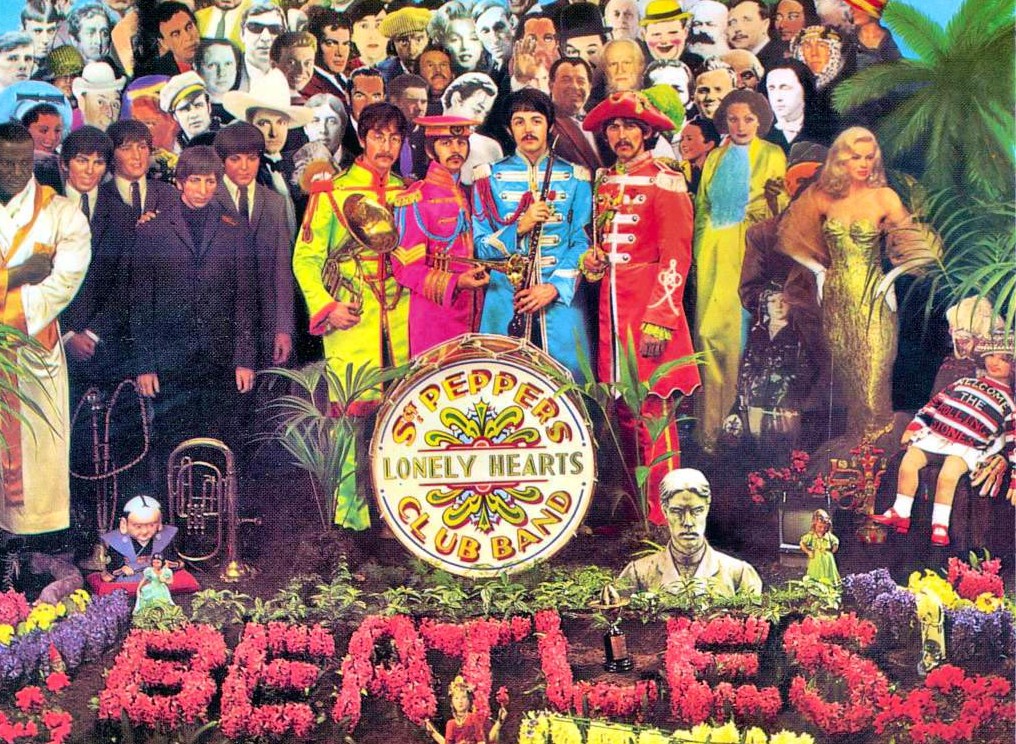
The cover, designed by Peter Blake and Jann Haworth, is one of the most iconic in music history. he Beatles in their Sgt. Pepper uniforms, surrounded by a collage of famous figures, including Marilyn Monroe, Bob Dylan, Karl Marx, and more. The concept reflected the idea of a performance by a global, eclectic band.
When "Sgt. Pepper's Lonely Hearts Club Band" was released on June 1, 1967, it was an immediate cultural phenomenon: it became a symbol of the Summer of Love, capturing the spirit of the 1960s counterculture movement. The album was praised for its innovation and artistic ambition, setting a new standard for what an album could achieve. It won 4 Grammy Awards, including Album of the Year—the first rock album to do so.
Sgt. Pepper transformed popular music by demonstrating that albums could be cohesive works of art rather than just collections of singles. Its influence is still felt today in both music and culture.
For The Beatles, it was a creative peak, and though they would continue to innovate with later albums, "Sgt. Pepper" remains one of their crowning achievements—a testament to their genius, imagination, and enduring legacy.