
In 1960, a Liverpool club owner named Allan Williams helped the Beatles secure a gig in Hamburg, Germany. At the time, the band consisted of John Lennon, Paul McCartney, George Harrison, Stuart Sutcliffe (on bass), and Pete Best (on drums). They were young and raw but eager to make it big. Hamburg was known for its nightlife, full of seedy clubs and a vibrant, often wild audience. It wasn’t glamorous, but it was a place to sharpen their skills.
The group played at venues like the Indra Club and the Kaiserkeller, which were situated in the red-light district of Hamburg, St. Pauli. Their sets were long—sometimes up to eight hours a night—and grueling, but it forced them to experiment, improve their stamina, and develop their stage presence.
Living conditions were far from ideal. The band stayed in a back room of a movie theater (Bambi Kino), sleeping in cramped quarters with no proper amenities. Their days were spent rehearsing and recovering from their nightly performances, which often stretched into the early hours of the morning.
Despite the hardships, the intense schedule helped the Beatles evolve. Playing night after night, they became tighter as a band and began to develop the charismatic energy that later defined them. They also started experimenting with their look, particularly under the influence of local fans and other musicians.
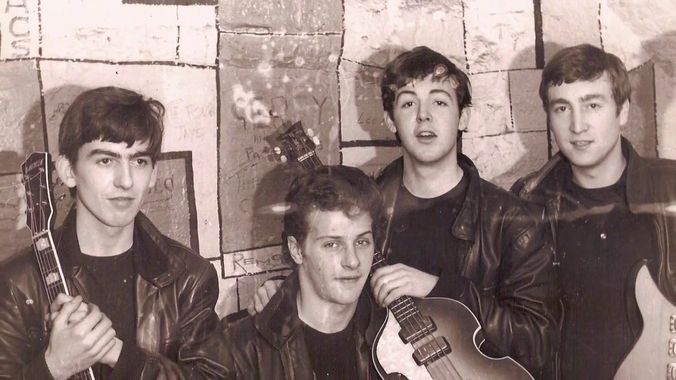
Stuart Sutcliffe, the band's original bassist, was more of an artist than a musician and often struggled to keep up musically. During the Hamburg days, he fell in love with a German photographer, Astrid Kirchherr, who encouraged him to pursue his art. He eventually left the band to stay in Hamburg with her, leaving Paul McCartney to switch to bass.
Astrid, incidentally, also had a significant influence on the Beatles’ style. She introduced them to the iconic "moptop" haircut, which became a key part of their image.
The band's Hamburg residency came with its fair share of drama. George Harrison was deported for being underage (he was only 17). Paul McCartney and Pete Best were arrested and deported after being accused of arson (they allegedly set a condom on fire in their room as a prank). These setbacks didn’t dampen their spirit, though—they returned to Hamburg several times over the next couple of years, growing more confident with each trip.
Hamburg was where the Beatles truly honed their craft. They absorbed influences from American rock ‘n’ roll, rhythm and blues, and early Motown. They expanded their repertoire, learned to work an audience, and started developing the dynamic chemistry that would later captivate the world. Their gritty performances helped them stand out, with Lennon’s raw vocals, McCartney’s melodic bass lines, Harrison’s sharp guitar work, and their tight harmonies.
When the Beatles returned to Liverpool after their Hamburg stints, they were almost unrecognizable. Their performances at places like The Cavern Club showcased a polished, confident band ready for bigger things. Hamburg had toughened them up and given them the experience they needed to dominate the music world.
Many people credit their time in Hamburg as the period where the Beatles truly became the Beatles—the band that would go on to revolutionize music and culture forever. Without those formative years in Hamburg, it’s hard to imagine them achieving the same success.
What’s amazing is that Hamburg wasn’t just about the music. It was also about the friendships, the style, and the resilience they built during those rough and rowdy nights. It’s the stuff of rock legend.