
1. Theoretical Foundations
A. The Concept of Civilization
Huntington defines a civilization as the highest cultural grouping of people and the broadest level of cultural identity. Unlike nations or ethnic groups, civilizations are defined by:
- Religion (e.g., Christianity for the West, Islam for the Islamic world)
- Language (e.g., English, Arabic, Mandarin)
- History and traditions (e.g., the Renaissance for the West, the Islamic Golden Age for the Muslim world)
- Customs and institutions (e.g., democracy in the West, tribal structures in Africa).
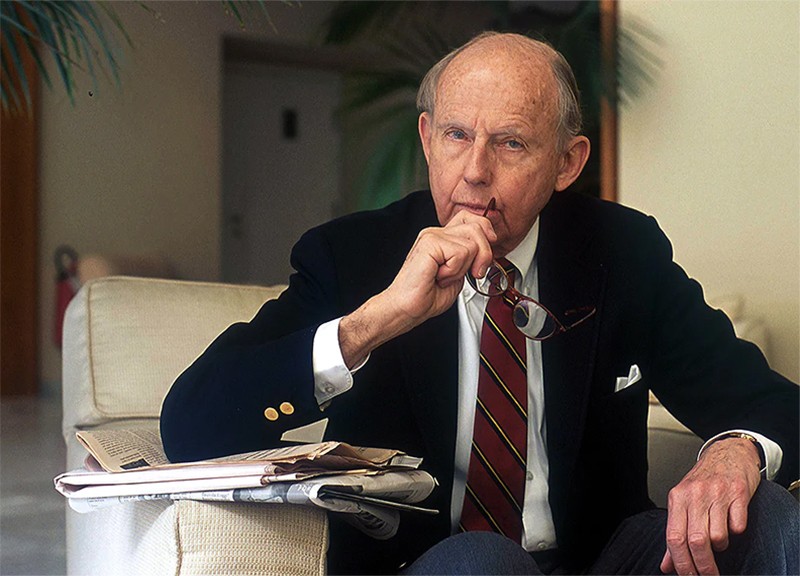
He identifies 9 major civilizations in the post-Cold War world:
- Western
- Islamic
- Sinic (Chinese)
- Hindu
- Orthodox (Russia and Eastern Europe)
- Latin American
- African
- Buddhist
- Japanese (considered a distinct civilization due to its uniqueness).
Huntington argues that these civilizations are incommensurable—their values, norms, and worldviews are fundamentally different, making mutual understanding difficult.
B. The End of Ideology, the Rise of Culture
Huntington’s thesis emerged in the context of the end of the Cold War (1989–1991). He challenges Francis Fukuyama’s The End of History and the Last Man (1992), which argued that liberal democracy and capitalism had triumphed as the final form of human government. Huntington, in contrast, asserts that:
- History did not end: The world did not converge toward a single political or economic model.
- Culture matters more than ideology: While the Cold War was fought over ideological differences (capitalism vs. communism), future conflicts would be driven by cultural and religious identities.
He observes a resurgence of religion and cultural identity in the 1990s, particularly in the Islamic world, as evidence of this shift.
C. The Clash of Civilizations: Why It Happens
Huntington identifies six reasons why civilizations will clash:
- Differences are real and fundamental - Civilizations are defined by their core values (e.g., individualism in the West vs. collectivism in Asia), which are deeply rooted and resistant to change.
- Interactions are increasing - Globalization brings civilizations into closer contact, increasing the potential for friction.
- The West’s decline - As Western power wanes, non-Western civilizations (e.g., China, Islam) assert their own values and resist Western dominance.
- Civilizational consciousness - People are becoming more aware of their civilizational identity and are mobilizing around it (e.g., the rise of political Islam).
- The role of the West - The West’s universalist pretensions (e.g., promoting democracy and human rights) provoke backlash from other civilizations, which see this as cultural imperialism.
- Lack of a higher authority - There is no global institution or shared moral framework to mediate conflicts between civilizations.
2. Key Implications of Huntington’s Theory
A. Geopolitical Predictions
Huntington’s theory has several geopolitical implications:
Fault Line Conflicts: The most dangerous conflicts will occur along the fault lines between civilizations, such as:
- West vs. Islam: Conflicts in the Balkans, Middle East, and North Africa (e.g., Bosnia, Israel-Palestine, Algeria).
- West vs. Orthodox: Tensions between NATO and Russia (e.g., Ukraine, Georgia).
- West vs. Sinic: Rising tensions between the U.S. and China over trade, technology, and influence in Asia.
- Islam vs. Hinduism: Conflicts in South Asia (e.g., India-Pakistan, Kashmir).
- Islam vs. Orthodoxy: Conflicts in the Caucasus (e.g., Chechnya, Armenia-Azerbaijan).
Alliances within Civilizations: States will increasingly align with others in their civilization. For example:
- Muslim-majority countries (e.g., Turkey, Pakistan, Iran) may cooperate more closely, despite political differences.
- Western countries (e.g., U.S., EU, Australia) will prioritize their shared cultural identity over other considerations.
The Decline of the Nation-State
Huntington suggests that civilizational identity will become more important than national identity in shaping global politics. For example, a Muslim in India may feel more kinship with a Muslim in Indonesia than with a Hindu in India.
B. The Role of the West
Huntington’s analysis includes a prescriptive element for the West:
- Avoid Universalism: The West should abandon the idea that its values (e.g., democracy, human rights, secularism) are universal. Attempts to impose these values on other civilizations will provoke resistance.
- Accept Multipolarity: The West must recognize that it is no longer the sole superpower and that other civilizations (e.g., China, Islam) will rise.
- Strengthen Western Unity: The West should consolidate its own civilization by reinforcing shared values and institutions (e.g., NATO, EU).
- Promote Dialogue: The West should engage in inter-civilizational dialogue to prevent conflicts, but it should not expect other civilizations to adopt its values.
Huntington’s view of the West is pessimistic: He sees it as a civilization in decline, facing demographic stagnation, moral decay, and economic competition from Asia.
C. The "Torn Countries"
Huntington identifies torn countries—states that are culturally divided between civilizations and thus face internal conflict. Examples include:
- Turkey: Divided between its Western (secular, pro-European) and Islamic (conservative, pro-Middle East) identities.
- Mexico: Torn between its Latin American (Catholic, Hispanic) and Western (pro-U.S.) identities.
- Russia: Struggles between its Orthodox (Slavic) and Western (European) identities.
- India: Divided between its Hindu majority and Muslim minority, as well as its Westernized elite and traditional masses.
These countries are particularly vulnerable to civilizational conflict and may become battlegrounds for influence between civilizations.
3. Criticisms and Debates
Huntington’s theory has been widely debated and criticized since its publication. Below are the major critiques:
A. Methodological Criticisms
- Essentialism: Huntington’s division of the world into discrete civilizations is essentialist—it assumes that civilizations have fixed, unchanging identities. Critics argue that civilizations are dynamic and hybrid, with significant internal diversity (e.g., the Islamic world includes Sunni, Shia, Sufi, and secular traditions)
- Determinism: His theory is deterministic, suggesting that civilizational conflict is inevitable. Critics argue that this ignores the role of agency, diplomacy, and cooperation in shaping international relations
- Lack of Empirical Support: Huntington’s theory is not falsifiable—it cannot be tested or refuted using empirical evidence. This violates Karl Popper’s criterion for scientific theories, which must be open to refutation
- Selective Use of History: Huntington cherry-picks historical examples to support his thesis while ignoring cases of civilizational cooperation (e.g., the Islamic Golden Age’s preservation of Greek philosophy, the Silk Road’s cultural exchanges)
B. Conceptual Criticisms
What is a Civilization?: Huntington’s definition of civilization is vague and inconsistent. For example:
- He treats Japan as a separate civilization, despite its cultural ties to China (e.g., Confucianism, Buddhism).
- He groups Latin America with the West, despite its distinct colonial history and Catholic identity.
- He defines Africa as a civilization, but its diversity (e.g., North Africa vs. Sub-Saharan Africa) makes this categorization problematic.
Civilization vs. Other Identities: Huntington overstates the importance of civilizational identity while downplaying other sources of identity and conflict, such as:
- Class (e.g., Marxist conflicts, income inequality)
- Nationalism (e.g., conflicts between nations within the same civilization, such as Germany and France in WWI/WWII)
- Economic interests (e.g., trade wars, resource conflicts)
- Ideology (e.g., authoritarianism vs. democracy within the same civilization).
The West as a Monolith: Huntington treats the West as a homogeneous civilization, ignoring its internal divisions (e.g., U.S. vs. Europe, secular vs. religious values, left vs. right politics).
C. Normative Criticisms
- Self-Fulfilling Prophecy: Huntington’s theory has been used to justify Western policies that treat the Islamic world as an inherent threat (e.g., the "War on Terror"). Critics argue that this has fueled the very conflicts it predicts, creating a self-fulfilling prophecy.
- Orientalism: Some scholars accuse Huntington of Orientalism—a Western tendency to portray non-Western civilizations (especially Islam) as inherently backward, violent, or incompatible with modernity. This reinforces stereotypes and justifies Western interventionism.
- Ignoring Modernization: Huntington assumes that non-Western civilizations are incapable of modernizing on their own terms. However, many non-Western societies (e.g., Japan, South Korea, Singapore) have successfully modernized while retaining their cultural identities.
D. Alternative Theories
Huntington’s thesis has inspired counter-theories that challenge his pessimistic view:
- The Dialogue of Civilizations: Proposed by scholars like Youssef Courbage and Emmanuel Todd, this theory argues that civilizations are converging due to demographic, economic, and technological changes. For example, globalization and urbanization are creating shared values and reducing cultural differences.
- The End of History (Fukuyama): Fukuyama’s argument that liberal democracy and capitalism represent the endpoint of humanity’s ideological evolution directly contradicts Huntington’s focus on cultural conflict.
- Cosmopolitanism: Thinkers like Ulrich Beck argue that globalization is creating a global civil society with shared norms (e.g., human rights, environmentalism) that transcend civilizational divides.
- Hybrid Identities: Scholars like Stuart Hall emphasize that identities are fluid and hybrid, not fixed by civilization. For example, a person may identify as both Muslim and European, or as both Chinese and American.
4. Real-World Impact
A. Influence on U.S. Foreign Policy
Huntington’s theory has had a significant impact on U.S. foreign policy, particularly after 9/11:
- The "War on Terror": The Bush administration framed the 9/11 attacks as a clash between the West and Islam, echoing Huntington’s thesis. This justified military interventions in Afghanistan and Iraq, as well as policies like the Patriot Act and Guantanamo Bay.
- The "Axis of Evil": The Bush administration’s labeling of Iran, Iraq, and North Korea as an "axis of evil" reflected a civilizational view of global politics, with the U.S. as the leader of the "free world" against “rogue states”.
- Clash of Civilizations Narrative: Media and political discourse in the West often uses Huntington’s framework to explain conflicts (e.g., the rise of ISIS, the Ukraine war, U.S.-China tensions). This has polarized global politics and reinforced a "us vs. them" mentality.
B. Global Reactions
- In the Islamic World: Huntington’s theory has been widely rejected by Muslim scholars and leaders, who see it as a Western attempt to demonize Islam. However, some Islamist groups (e.g., Al-Qaeda, ISIS) have adopted his framework, using it to justify their own narratives of a global struggle between Islam and the West.
- In China: Huntington’s prediction of a Sinic civilization rising to challenge the West has been embraced by some Chinese nationalists, who see it as validation of China’s growing power. However, others criticize his essentialist view of Chinese culture.
- In Europe: Huntington’s theory has fueled debates about immigration, multiculturalism, and European identity. Some politicians (e.g., far-right parties) use his ideas to argue for restrictive immigration policies and the defense of “Western values”.
C. Academic Legacy
Despite its controversies, Clash of civilisations remains a seminal work in geopolitics and international relations. It has:
- Sparked debates about the role of culture in global politics.
- Inspired new research on civilizational identity, fault line conflicts, and inter-civilizational dialogue.
- Influenced other theories, such as the "Clash of Ignorance" (Edward Said’s critique) and the "Dialogue of Civilizations" (a counter-thesis).
5. Strengths and Weaknesses of Huntington’s Theory
| Strengths | Weaknesses |
|---|---|
| Highlights the importance of culture in global politics, which was often overlooked in Cold War-era theories. | Overemphasizes culture while ignoring economic, political, and social factors. |
| Predicts the rise of non-Western powers (e.g., China, Islam) and the decline of Western dominance. | Treats civilizations as monolithic, ignoring internal diversity and hybrid identities. |
| Explains some post-Cold War conflicts (e.g., Bosnia, 9/11, U.S.-China tensions) through a civilizational lens. | Deterministic and pessimistic, suggesting that conflict is inevitable. |
| Challenges Western universalism, arguing that non-Western civilizations have their own valid values and institutions. | Essentialist and static, assuming that civilizations have fixed, unchanging identities. |
| Influential in policy and academic circles, shaping debates about global order. | Lacks empirical rigor, making it difficult to test or refute. |
6. Contemporary Relevance (2026)
Huntington’s theory continues to be relevant and controversial in 2026:
- U.S.-China Tensions: The rivalry between the U.S. (West) and China (Sinic civilization) is often framed as a civilizational clash, with conflicts over trade, technology, and influence in Asia.
- Russia-Ukraine War: Some analysts interpret the war as a conflict between the West and Orthodox civilization (Russia), with Ukraine torn between its European and Russian identities.
- Rise of Populism and Nationalism: The growth of far-right and nationalist movements in the West (e.g., in Europe, the U.S.) reflects a backlash against multiculturalism and a reassertion of "Western identity," echoing Huntington’s warnings.
- Islamophobia and Anti-Western Sentiment: Huntington’s thesis has been used to justify Islamophobia in the West and anti-Western rhetoric in the Muslim world, reinforcing a cycle of mistrust.
- Climate Change and Global Challenges: Critics argue that Huntington’s focus on civilizational conflict ignores the need for global cooperation to address shared challenges like climate change, pandemics, and nuclear proliferation.
7. Conclusion: A Provocative but Flawed Framework
Samuel Huntington’s Le Choc des civilisations is a provocative and influential theory that shifted the focus of global politics from ideology to culture. It offers a useful lens for understanding some post-Cold War conflicts and the rise of non-Western powers. However, its essentialism, determinism, and lack of empirical rigor make it a flawed and contested framework.
Key Takeaways:
- Culture matters, but it is not the only factor shaping global politics.
- Civilizations are not monolithic—they are dynamic, diverse, and hybrid.
- Conflict is not inevitable—diplomacy, cooperation, and shared interests can overcome civilizational divides.
- The West is not the center of the world—other civilizations (e.g., China, Islam) are rising and asserting their own values.
- Huntington’s legacy is mixed—his theory has been both used and abused in politics and academia, shaping debates about identity, conflict, and global order.
Final Thought:
Huntington’s theory is best read as a warning—not about the inevitability of civilizational conflict, but about the dangers of ignoring cultural identities in a globalized world. The challenge for the 21st century is to balance diversity with cooperation, ensuring that civilizational differences do not lead to clash, but to dialogue and mutual understanding.