
1. What Is Wokism? A Contested Definition
The term "woke" (originally from African American Vernacular English, meaning "alert to racial injustice") has evolved into a broad, often vague label applied to:
- Social justice movements (e.g., Black Lives Matter, #MeToo, LGBTQ+ rights).
- Academic frameworks (e.g., critical race theory, intersectionality, postcolonial studies).
- Cultural practices (e.g., political correctness, cancel culture, diversity and inclusion policies).
- Political ideologies (e.g., anti-racism, anti-capitalism, decolonialism).
Critics often use "wokism" to describe what they see as excessive, dogmatic, or illiberal forms of progressivism. Supporters see it as a necessary corrective to historical and systemic injustices.
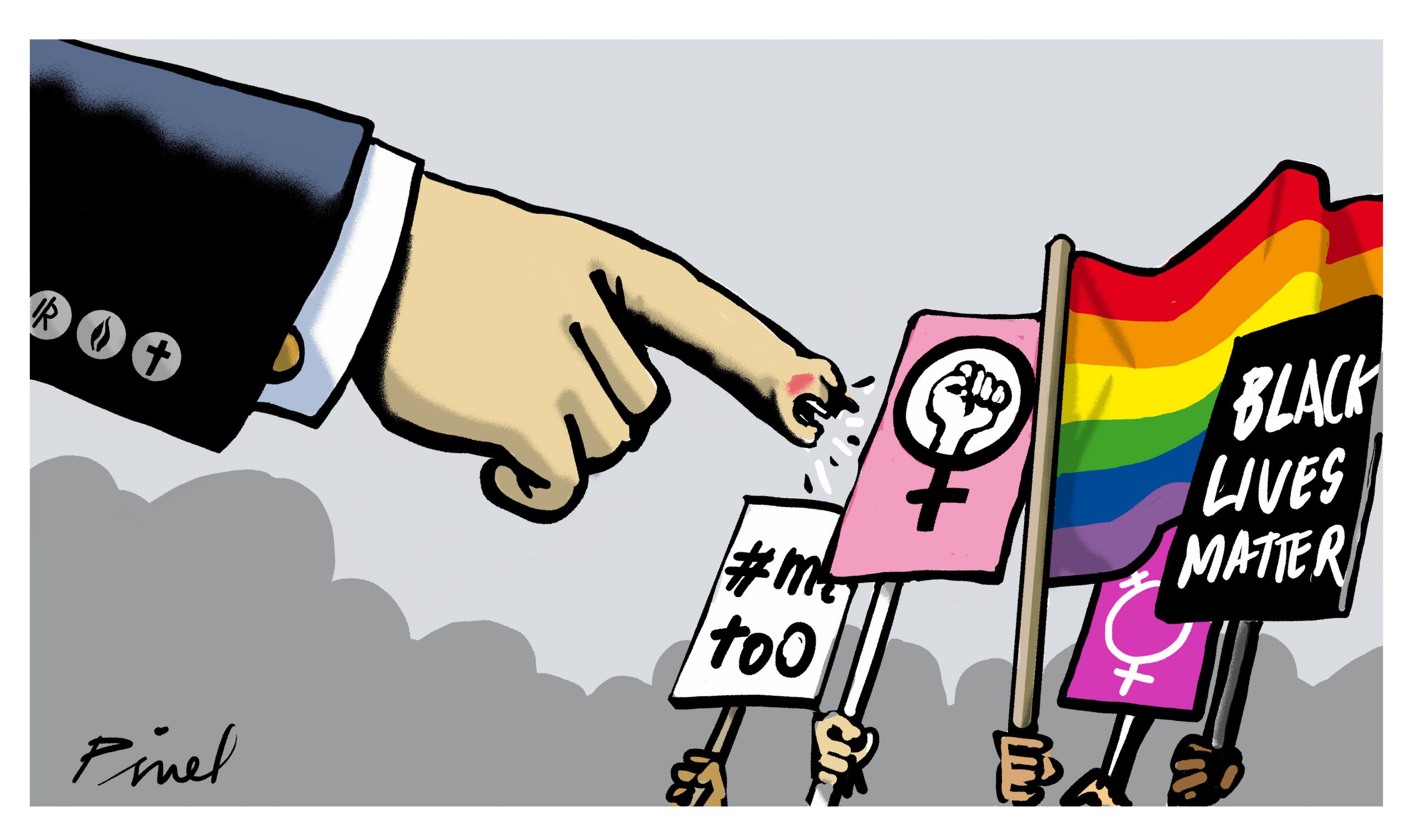
2. Arguments That Wokism Is Dangerous
A. Threats to Free Speech and Open Debate
Cancel Culture
Critics argue that wokism encourages punishing or silencing individuals for expressing unpopular or controversial views, leading to:
- Self-censorship in academia, media, and workplaces.
- Deplatforming of speakers (e.g., university disinvitations, social media bans).
- Chilling effects on intellectual diversity, where people fear repercussions for dissenting from progressive orthodoxy.
In 2020, over 150 scholars and intellectuals (including Noam Chomsky and J.K. Rowling) signed the Harper’s Letter warning against “intolerance of opposing views, a vogue for public shaming and ostracism, and the tendency to dissolve complex policy issues in a blinding moral certainty”.
Language Policing
Some argue that excessive focus on politically correct language (e.g., mandatory pronouns, bans on certain words) stifles free expression and creates a climate of fear around speech.
B. Undermining Objective Truth and Science
Relativism
Wokism’s emphasis on lived experience and social construction of knowledge is seen by critics as undermining objective truth, particularly in:
- Science: Debates over biological sex vs. gender identity, or race as a social construct vs. biological reality, are framed as attacks on empirical evidence.
- History: Some argue that revising historical narratives (e.g., the 1619 Project’s reframing of U.S. history around slavery) distorts facts in the name of political agendas.
In 2020, Donald Trump’s executive order banned federal agencies from using critical race theory training, arguing that it promoted "divisive, anti-American propaganda" that taught white people to feel guilty for their race.
C. Division and Polarization
Identity Politics
Critics argue that wokism fragments society into competing identity groups (e.g., race, gender, sexuality), leading to:
- Increased tribalism and decreased social cohesion.
- Resentment among groups who feel excluded or demonized (e.g., white working-class men, religious conservatives).
Surveys (e.g., Pew Research) show that political polarization in the U.S. has reached historic highs, with many Americans viewing the other side as not just wrong but evil.
D. Institutional Overreach
Workplace and Education
Critics argue that DEI (Diversity, Equity, and Inclusion) policies and critical race theory in schools can:
- Prioritize identity over merit in hiring, admissions, or promotions.
- Create a climate of guilt or resentment (e.g., "white fragility" workshops, implicit bias training).
In 2023, Florida and Texas passed laws banning DEI programs in public universities, arguing that they promote ideological indoctrination.
E. Authoritarian Tendencies
Illiberal Progressivism
Some critics (e.g., Jonathan Haidt, Steven Pinker, Jordan Peterson) argue that wokism mirrors the authoritarianism it claims to oppose, by:
- Enforcing conformity to progressive norms (e.g., mandatory anti-racism training).
- Suppressing dissent (e.g., firing professors for controversial views, as in the case of Joshua Katz at Princeton).
- Using shame and ostracism as tools of social control (e.g., public call-outs, doxxing).
3. Arguments That Wokism Is Not Dangerous (or Even Beneficial)
A. Correcting Historical Injustices
Systemic Oppression
Supporters argue that wokism exposes and challenges long-standing systems of oppression, such as:
- Racism (e.g., mass incarceration, police brutality, redlining).
- Sexism (e.g., gender pay gaps, sexual harassment, lack of representation).
- LGBTQ+ Discrimination (e.g., conversion therapy, lack of healthcare access).
The #MeToo movement led to the exposure of powerful abusers (e.g., Harvey Weinstein) and legal reforms (e.g., changes to workplace harassment laws).
B. Promoting Inclusivity and Representation
Diversity in Institutions
Wokism has pushed for greater representation in:
- Media (e.g., more diverse casting in films, TV shows).
- Politics (e.g., more women and minorities in government).
- Education (e.g., curricula that include marginalized voices).
Studies show that diverse teams in workplaces lead to better decision-making and innovation.
C. Expanding Civil Rights
Legal and Social Progress
Wokism has contributed to:
- Marriage equality (e.g., legalization of same-sex marriage).
- Transgender rights (e.g., access to healthcare, legal recognition).
- Police reform (e.g., body cameras, bans on chokeholds).
The 2020 Supreme Court ruling (Bostock v. Clayton County) extended anti-discrimination protections to LGBTQ+ employees.
D. Challenging Harmful Norms
Language and Culture
Supporters argue that updating language (e.g., using "they/them" pronouns, avoiding racial slurs) reduces harm and promotes dignity.
Research shows that gender-inclusive language can reduce gender stereotypes and improve mental health outcomes for transgender individuals.
E. Encouraging Critical Thinking
Questioning Power Structures
Wokism encourages people to critically examine systems of power (e.g., capitalism, patriarchy, white supremacy) and their own biases.
Critical race theory in law schools has helped expose racial biases in the legal system, leading to reforms in sentencing and policing.
4. The Middle Ground: Wokism as a Double-Edged Sword
Many observers (including some progressives) argue that wokism has both positive and negative effects, depending on how it is applied:
| Potential Benefit | Potential Risk |
|---|---|
| Exposes systemic injustice | Overgeneralizes or misapplies critiques (e.g., labeling all white people as "privileged"). |
| Promotes inclusivity | Leads to tokenism or performative activism (e.g., corporations using DEI for PR). |
| Expands civil rights | Undermines free speech (e.g., punishing dissent). |
| Encourages empathy | Fosters resentment (e.g., "woke shaming" of allies). |
| Challenges harmful norms | Creates new orthodoxies (e.g., mandatory ideological conformity). |
5. Empirical Evidence: Is Wokism Harmful?
A. Surveys and Public Opinion
Pew Research (2023)
61% of Americans believe that "woke" policies (e.g., DEI, critical race theory) divide the country more than they unite it.
YouGov (2022)
56% of Americans see "woke culture" as a threat to free speech, while 34% see it as a force for good.
France (2024)
A majority of French citizens (62%) oppose "wokisme", associating it with American cultural imperialism and attacks on French secularism (laïcité).
B. Academic and Workplace Studies
Harvard Study (2023)
Found that DEI training in workplaces often backfires, leading to increased resentment among majority groups (e.g., white men) without improving diversity outcomes.
University of Michigan (2021)
Mandatory anti-bias training was found to be less effective than voluntary programs, as it can trigger resistance.
Heterodox Academy
Reports that political homogeneity in academia (e.g., 90% of social science professors in the U.S. identify as liberal) stifles intellectual diversity and discourages conservative viewpoints.
C. Free Speech and Campus Culture
FIRE (Foundation for Individual Rights and Expression)
Tracks hundreds of cases annually where students or professors face punishment for speech (e.g., suspensions, firings) due to woke activism.
In 2023, a professor at Hamline University was fired for showing a 14th-century Islamic painting of the Prophet Muhammad in an art history class, after Muslim students complained it was Islamophobic.
6. Global Perspectives: Wokism Outside the U.S.
France
Wokism is widely rejected by both the left and right. President Emmanuel Macron has denounced "Islamo-leftism" and banned "woke" ideas from universities, arguing they undermine French republican values (e.g., secularism, universalism).
UK:
The Equality Act (2010) and hate speech laws are influenced by progressive ideas, but Rishi Sunak’s government has cracked down on "woke" policies in schools and the civil service.
Latin America
Decolonial movements (e.g., in Bolivia, Mexico) share some ideas with wokism but reject the U.S. framing of identity politics.
China
The government bans "woke" ideas (e.g., feminism, LGBTQ+ rights) as Western subversion, while promoting its own nationalist narratives.
7. Conclusion: Is Wokism Dangerous?
The answer depends on how wokism is defined and applied:
✅ Wokism as a Force for Good
- When it challenges systemic injustice (e.g., racism, sexism, homophobia).
- When it promotes inclusivity and representation without sacrificing merit or free speech.
- When it encourages critical thinking rather than dogmatic conformity.
❌ Wokism as a Danger
- When it suppresses free speech (e.g., cancel culture, deplatforming).
- When it replaces objective truth with ideological narratives (e.g., rejecting science in favor of "lived experience").
- When it fosters division (e.g., identity politics that pit groups against each other).
- When it becomes authoritarian (e.g., mandatory re-education, punishment for dissent).
🔍 The Big Picture
Wokism is not inherently dangerous, but its excesses can be. The key question is:
- Does it liberate or oppress?
- Does it unite or divide?
- Does it seek justice or impose orthodoxy?
Many of the criticisms of wokism (e.g., illiberalism, relativism) mirror criticisms that were once leveled at French Theory—that it deconstructs without offering alternatives, or that it replaces one form of dogma with another.
Final Thought:
Wokism, like any powerful intellectual or social movement, can be a tool for progress or a weapon of division. Its impact depends on how it is wielded—whether as a scalpel to excise injustice or a bludgeon to silence dissent.