

The mass exodus of Jews from Arab countries—including Morocco—is indeed one of the least discussed displacements of the 20th century, despite involving 850,000–1 million people (roughly equal to the Palestinian Nakba). Several factors explain this historical silence:
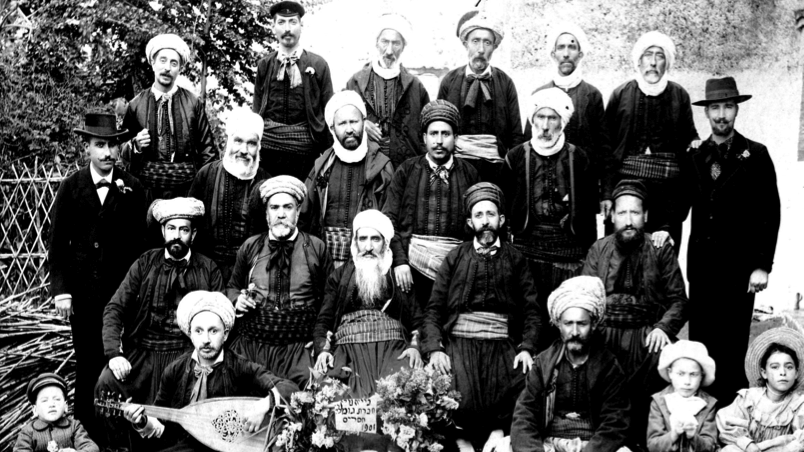
1. Political Narratives Dominate the Israeli-Palestinian Conflict
- Focus on 1948 Palestinian displacement: The Palestinian Nakba is central to Arab and global discourses on the conflict, often framing Jews as perpetrators rather than victims of parallel displacements.
- Arab governments’ suppression: Many regimes (e.g., Iraq, Egypt) erased Jewish history from textbooks and public memory to avoid acknowledging their role in expulsions. Admitting past persecution could weaken their moral stance against Israel.
- Israel’s early prioritization: In the 1950s–60s, Israel emphasized absorbing Jewish refugees but downplayed their Arab origins to foster a unified "Israeli" identity. Mizrahi (Middle Eastern/North African) Jews were pressured to assimilate into Ashkenazi (European) culture, marginalizing their stories.
2. Cold War and Western Bias
- Soviet influence: The USSR framed the conflict as "colonialist Israel vs. oppressed Arabs," ignoring Arab Jews’ forced exodus. Western media often adopted this binary.
- Orientalism: European/American observers viewed Arab Jews as "saved by Israel," overlooking their centuries-old roots in the region and the trauma of uprooting.
- Lack of advocacy: Unlike Palestinian refugees, who had the PLO and UNRWA to amplify their cause, Mizrahi Jews had no unified political voice until the 1970s–80s.
3. Mizrahi Jews’ Marginalization in Israel
- Ashkenazi dominance: Israel’s early elite (mostly European) dismissed Mizrahi experiences, portraying their arrival as a "rescue" rather than a second displacement. Terms like "edot hamizrach" (Eastern communities) carried stigma.
- Economic disparities: Mizrahim faced discrimination in housing, jobs, and education, leading to protests (e.g., 1971 Black Panthers movement). Their stories were sidelined in favor of a Zionist narrative focused on Holocaust survivors.
- Late recognition: Israel only officially commemorated the exodus of Arab Jews in 2014 (with November 30 as an annual memorial day), decades after the events.
4. Arab World’s Collective Amnesia
-
Nationalist mythmaking: Arab countries rewrote history to portray Jews as "foreign colonists" rather than indigenous communities. For example:
- Iraq’s 2021 textbooks still claim Jews "left voluntarily" for Israel, omitting the 1951 denaturalization law.
- Egypt’s state media ignores the 1956 expulsions, despite Jews living there since Pharaonic times.
- Fear of normalization: Acknowledging past Jewish life could imply legitimacy for Israel. Even today, discussing Jewish heritage (e.g., synagogues in Syria) is taboo in many Arab states.
5. Global Media and Academic Gaps
- Language barriers: Most primary sources (e.g., testimonies, government decrees) are in Arabic, Hebrew, or French, limiting access for English-speaking researchers.
- Lack of visual evidence: While the Palestinian Nakba has iconic photos (e.g., Deir Yassin), Arab Jewish dispossession was bureaucratic (laws, asset freezes) or clandestine (smuggled out via operations like Magic Carpet), making it harder to document.
- Selective outrage: Western progressives often highlight Palestinian suffering but overlook Jewish refugees from Arab lands, seen as complicating the "oppressor vs. oppressed" framework.
6. Recent Shifts: Breaking the Silence
Change is happening, albeit slowly:
- Mizrahi activism: Groups like JIMena and Harif document testimonies and lobby for recognition.
- Arab-Israeli normalization: The 2020 Abraham Accords led to renewed interest in Jewish heritage (e.g., UAE synagogues, Morocco’s Jewish museums).
- Scholarly work: Books like * Arabs and Jews in Ottoman Palestine* (by Alan Dowty) or * The Forgotten Refugees* (film) challenge the erasure.
- Social media: Younger Mizrahim (e.g., @mizrahi_jew on Instagram) share family stories, countering stereotypes.
Why Morocco’s Case is Different (and Still Overlooked)
Morocco’s less violent exodus (compared to Iraq or Libya) means it’s often excluded from discussions of "expulsions," even though:
- 99% of Moroccan Jews left due to systemic pressures.
- Property confiscations (e.g., mellah homes sold for pennies) mirror other Arab countries’ policies.
- Cultural loss: Cities like Casablanca and Fez had Jewish majorities in some neighborhoods—now nearly gone.
Controversies and Pushback
- Accusations of "whataboutism": Some fear that highlighting Arab Jewish refugees undermines Palestinian claims, though the two are not mutually exclusive. Both groups deserve acknowledgment.
- Israeli government co-optation: Right-wing politicians sometimes instrumentalize Mizrahi history to justify policies, making the topic polarizing.
What’s Missing from the Conversation?
- Reparations: While Palestinian refugees have UNRWA, Arab Jewish property claims (estimated at $300 billion) remain unresolved. A 2010 U.S. law (HR 185) urged recognition but had little impact.
- Shared narratives: Rare projects like The Arab and Jew Show explore joint heritage, but such efforts are exceptions.
- Education: Most schools—Arab, Israeli, or Western—don’t teach this history. France, home to 500,000 North African Jews, barely covers it in curricula.