

The Canaanites were an ancient people who lived in the Levant region (modern-day Lebanon, Israel, Palestine, Jordan, and parts of Syria) during the Bronze Age (approximately 3000–1200 BCE). They are best known from the Hebrew Bible (Old Testament), where they are often depicted as the inhabitants of the "Promised Land" before the arrival of the Israelites. However, historical and archaeological evidence provides a more nuanced picture.
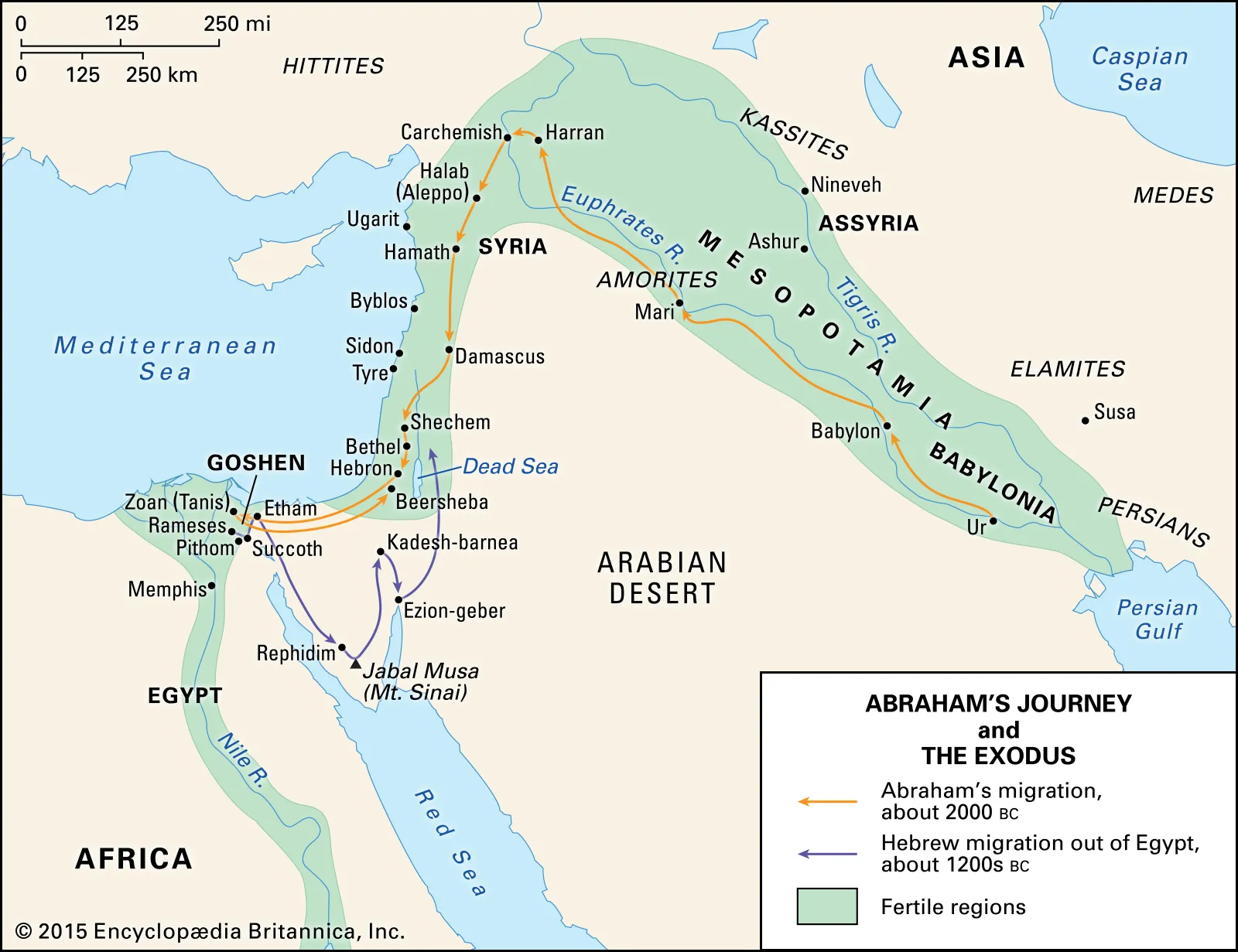
Key Facts About the Canaanites
Geographical and Cultural Context:
- The Canaanites were not a single, unified ethnic group but rather a collection of city-states (such as Ugarit, Megiddo, Hazor, and Jericho) that shared a common language, religion, and culture.
- They were part of a broader Semitic-speaking population in the ancient Near East, closely related to other groups like the Phoenicians (who emerged later from Canaanite roots).
Language and Writing:
- The Canaanites spoke Canaanite languages, a branch of the Semitic language family. The most famous example is Ugaritic, which was written in a cuneiform script and discovered in the ruins of Ugarit (modern Ras Shamra, Syria).
- Their language is also considered the ancestor of Hebrew and Phoenician.
Religion:
- The Canaanites practiced a polytheistic religion, worshipping deities like:
- El: The chief god, often called the "father of the gods."
- Baal: The storm and fertility god, associated with rain and agriculture.
- Asherah: A mother goddess, often linked to fertility and the sea.
- Astarté (Ishtar): A goddess of love and war.
- Their religious practices included sacrifices, temple rituals, and possibly child sacrifice (a debated topic among scholars).
Economy and Trade:
- The Canaanites were skilled agriculturists, growing crops like wheat, barley, olives, and grapes.
- They were also traders, connecting Egypt, Mesopotamia, and the Mediterranean. Their coastal cities (like Byblos, Tyre, and Sidon) became major hubs for trade in goods like cedar wood, purple dye, and glass.
Conflict and Decline:
- The Canaanites are often mentioned in the Bible as adversaries of the Israelites, who, according to the biblical narrative, conquered Canaan under leaders like Joshua.
- Archaeologically, the decline of Canaanite city-states around 1200–1150 BCE coincides with the Bronze Age Collapse, a period of widespread upheaval in the eastern Mediterranean. Factors like invasions (e.g., the Sea Peoples), economic collapse, and climate change likely contributed to their decline.
- After this period, the Phoenicians (descendants of the Canaanites) rose to prominence as seafaring traders and colonizers.
Canaanites in the Bible
- The Hebrew Bible portrays the Canaanites as idolatrous and morally corrupt, justifying their dispossession by the Israelites. This narrative reflects theological and political goals rather than historical accuracy.
- Modern archaeology shows that the Israelites and Canaanites shared many cultural traits, suggesting a more complex process of cultural assimilation and conflict.
Archaeological Discoveries
- Ugarit: A major Canaanite city where thousands of clay tablets were found, revealing their language, literature (including the Epic of Keret and the Ba'al Cycle), and religious practices.
- Canaanite Art: Known for ivory carvings, pottery, and metalwork, often depicting gods, animals, and daily life.
- Canaanite Cities: Excavations at sites like Megiddo, Hazor, and Lachish reveal fortified cities with palaces, temples, and advanced water systems.
Legacy of the Canaanites
- The Canaanites are the cultural ancestors of the Phoenicians, who later founded colonies like Carthage and spread their alphabet (the basis for Greek and Latin scripts).
- Their religious and mythological traditions influenced ancient Israelite religion and, by extension, the Abrahamic faiths (Judaism, Christianity, and Islam).
Misconceptions and Clarifications
- The term "Canaanite" is sometimes used too broadly in the Bible to refer to all inhabitants of the Levant, but archaeologically, it refers to a specific cultural group.
- The Canaanites were not a single kingdom but a loose collection of city-states with shifting alliances.
- Their "disappearance" is not a sudden extinction but a cultural transformation into groups like the Phoenicians and, partly, the early Israelites.