

The expedition against the Banu Mustaliq took place in December 627 AD, during the 8th month (Sha'ban) of the 6th year AH (Islamic calendar).
The Banu Mustaliq tribe belonged to a larger group called the Ahābīsh, who had been allied with the Quraysh of Mecca for centuries.
After a failed plot by another group (the Khawāzin), the Banu Mustaliq aligned themselves with Mecca.
They began preparing a military force to attack Muhammad's followers.
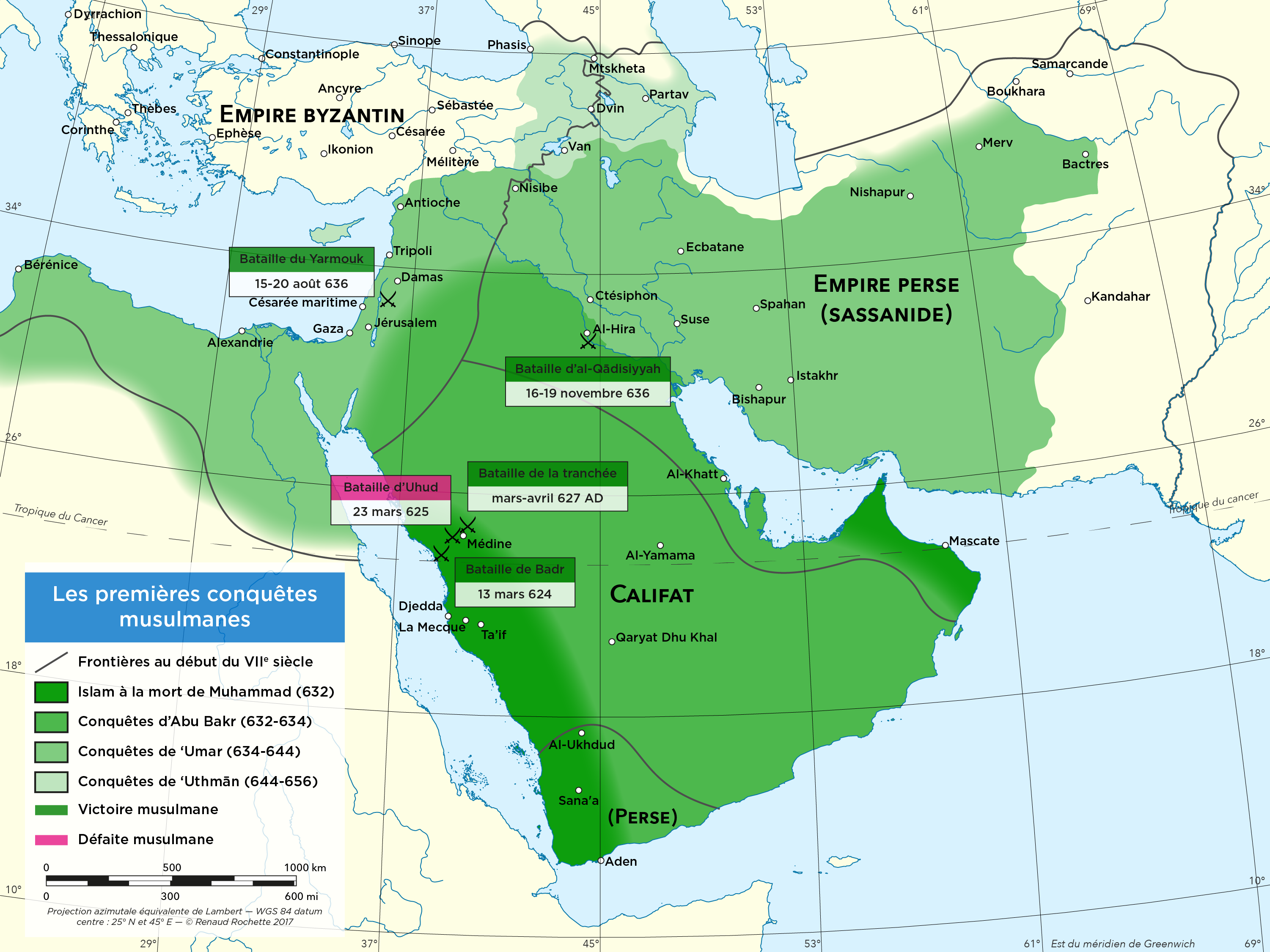
They lived between Yathrib (Medina) and Mecca, near a water source called al-Muraysī‘, close to Qudayd along the Red Sea.
News of their military mobilization reached the Prophet Muhammad through merchants, and he quickly organized a counter-offensive to intercept them.
The campaign was a success.
Around 200 women were taken as captives, and were initially distributed among Muslim warriors, with the understanding that their families could later pay a ransom for their release.
The Muslims also captured 200 camels, 5,000 sheep and goats, and a large quantity of household goods as spoils of war.
The household goods were auctioned off to the highest bidders.
According to Islamic law, one-fifth (1/5) of the spoils automatically belonged to the leader of the expedition, in this case, the Prophet Muhammad.
According to the sources “Ar-Raheeq Al-Makhtum” (The Sealed Nectar) and the Sunni hadith collection Sunan Abu Dawud, only one Muslim was killed, and it was an accident (killed by an ally).
According to Sahih Bukhari (Hadith 46/717):
“The male fighters were killed, and the women and children were taken as captives.”
Juwayriya, the daughter of the Banu Mustaliq chief, was among the captives.
She later married the Prophet Muhammad.
After this marriage, 100 prisoners were released, many of whom converted to Islam. This act was seen as compensation or reconciliation.