

the British Mandate for Palestine was a period (1920–1948) when Britain administered the land of Palestine under the authority of the League of Nations.
It’s an important chapter in the history of the Arab–Israeli conflict because many of the tensions we know today have roots there.
1. How it began
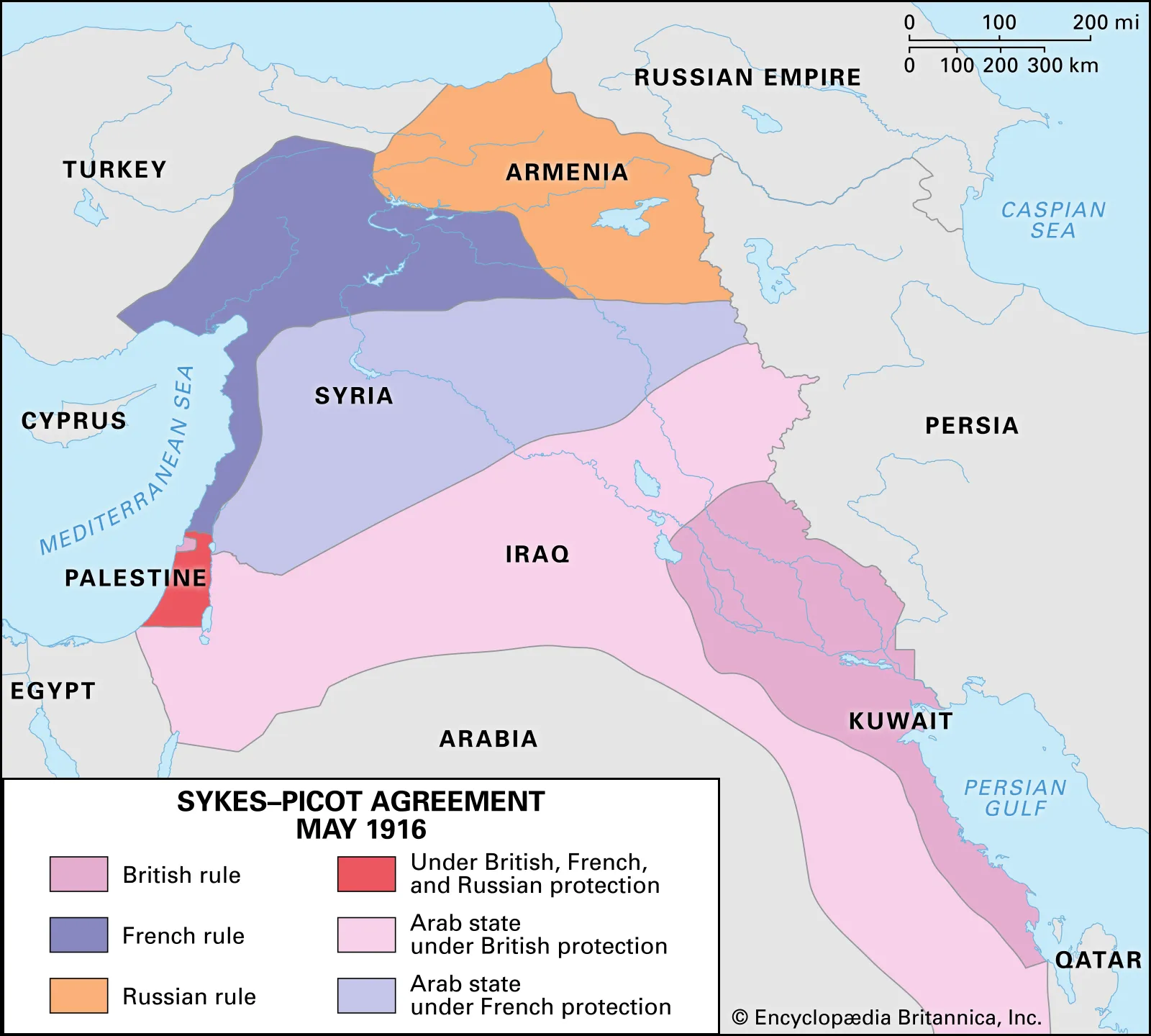
During World War I (1914–1918), Britain fought the Ottoman Empire, which had controlled Palestine for centuries.
In 1917, Britain issued the Balfour Declaration, promising support for “the establishment in Palestine of a national home for the Jewish people,” while also saying nothing should prejudice “the civil and religious rights of existing non-Jewish communities.”
At the same time, Britain made promises to Arab leaders (McMahon–Hussein Correspondence) suggesting support for Arab independence if they revolted against the Ottomans.
After the war, the League of Nations gave Britain a Mandate over Palestine (officially approved in 1922).
2. What the Mandate meant
Britain acted as the governing power, responsible for:
- Facilitating Jewish immigration and settlement (as per the Balfour Declaration).
- Protecting the rights of the Arab majority.
- Preparing the land for eventual self-government.
The area covered what is now Israel, the West Bank, Gaza, and Jordan (though Transjordan was split off in 1921).
3. Rising tensions
Jewish immigration increased sharply in the 1920s–1930s, especially with rising antisemitism in Europe.
Arab Palestinians feared loss of land and political dominance.
Violent clashes broke out:
- 1920 & 1921 riots.
- 1929 Hebron massacre and other violence.
- 1936–1939 Arab Revolt against British rule and Jewish immigration.
Britain struggled to balance its commitments to both communities.
4. The end of the Mandate
After World War II, Jewish immigration surged again, partly due to Holocaust survivors.
Violence escalated between Jewish underground groups, Arab militants, and the British army.
In 1947, Britain asked the newly formed United Nations to solve the issue.
The UN Partition Plan proposed two states — one Jewish, one Arab — with Jerusalem under international control.
Jews accepted the plan; most Arabs rejected it.
Britain withdrew on May 14, 1948, the same day the State of Israel was declared, leading immediately to the 1948 Arab–Israeli war.
✅ In short:
The British Mandate (1920–1948) was meant to prepare Palestine for self-rule, but conflicting promises and rising nationalist movements among both Jews and Arabs turned it into a period of escalating conflict that set the stage for the modern Israeli–Palestinian struggle.