

The Story of the 2006 Palestinian Elections in Gaza: The Rise of Hamas and the End of an Era
Prologue: Gaza, 2005 – The Aftermath of Disengagement
In August 2005, Israel unilaterally withdrew from Gaza, dismantling 21 settlements and pulling out 8,000 settlers. The move, led by Prime Minister Ariel Sharon, was framed as a "disengagement plan"—but it left Gaza in chaos.
- Palestinian Authority (PA), led by Fatah’s Mahmoud Abbas, was supposed to take control.
- Hamas, the Islamist militant group, saw an opportunity.
- The power vacuum set the stage for the 2006 elections—the first (and last) free and fair Palestinian elections in Gaza and the West Bank.
Chapter 1: The Road to Elections (2005–2006)
Why Elections Were Called
- Pressure from the U.S. and EU: After Arafat’s death (Nov 2004), the West demanded democratic reforms.
- Fatah’s Weakness: Corruption, infighting, and failure to deliver after Oslo had eroded trust in Abbas.
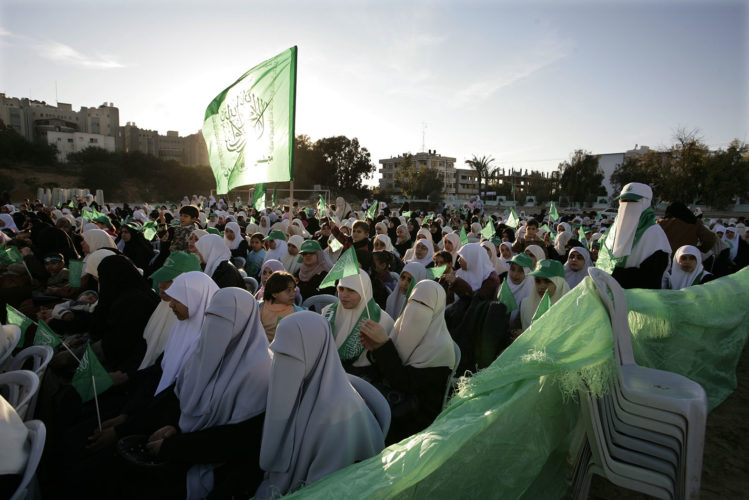
- Hamas’ Popularity: After years of armed resistance and social services (schools, clinics), Hamas had real grassroots support.
Chapter 2: The Campaign – Fatah’s Arrogance vs. Hamas’ Discipline
Fatah’s Mistakes
- Overconfidence: Fatah leaders (Mahmoud Abbas) assumed they’d win easily.
- Corruption Scandals: Many Palestinians saw Fatah as self-serving elites. For example, Mohammed Dahlan (Fatah’s Gaza strongman) was accused of embezzling millions.
- No Clear Vision: Abbas’ platform was vague—more negotiations, but no real change.
Hamas’ Strategy
- "Change and Reform" Slogan: Promised clean government, Islamic law, and resistance.
- Grassroots Campaigning: Door-to-door canvassing, free meals and services for voters.
- Discipline: Unlike Fatah’s chaotic infighting, Hamas presented a united front.
The Wildcard: The Prisoners’ Vote
- Maroon Barghouti (Fatah leader jailed by Israel) ran from prison and won a West Bank seat.
- Hamas exploited the "resistance" narrative—many Palestinians saw voting for Hamas as defiance against Israel and the West.
Chapter 3: Election Day – January 25, 2006
The Vote
- Turnout: 77% (high by any standard).
- International Observers: Declared the election "free and fair" (including Jimmy Carter).
-
Shock Result:
- Hamas: 74 seats (58% of the vote).
- Fatah: 45 seats.
- Others: 13 seats.
Reactions
- Gaza: Jubilant celebrations—Hamas supporters fired guns in the air, chanting "Allahu Akbar!"
- West Bank: Stunned silence—Fatah leaders refused to believe the results.
- Israel & the West: Panic. The U.S. and EU had pushed for elections, assuming Fatah would win.
"We didn’t expect this. We thought the people would vote for peace, not for Hamas." — A Fatah official, Jan 2006
Chapter 4: The Aftermath – A Descent into Chaos
The West’s Hypocrisy
- The U.S. and EU, who had demanded democratic elections, now refused to accept the result.
-
Conditions for Aid:
- Hamas must renounce violence.
- Recognize Israel.
- Accept past agreements.
- Hamas refused. The West cut off aid to the PA.
Fatah’s Refusal to Concede
- Abbas and Fatah refused to share power.
- U.S. and Israel backed Fatah in a coup attempt (2007).
The Hamas-Fatah Clashes (2006–2007)
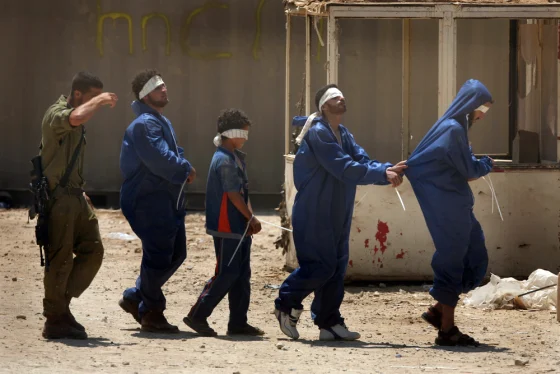
- Gaza vs. West Bank: Hamas controlled Gaza; Fatah held the West Bank.
-
June 2007: Hamas Takes Gaza by Force
- After months of street battles, Hamas seized control of Gaza in a week-long coup.
- Fatah officials were thrown off rooftops; others fled to the West Bank. 450 deads.
- Result: Palestinian division that lasts to this day.
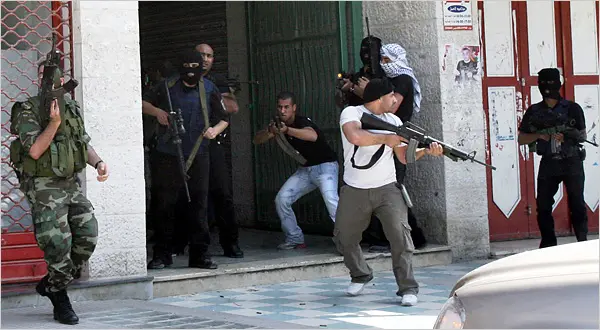
“The Purge: Hamas’ Bloodsoaked Takeover of Gaza” "They came with lists. Not arrest warrants—death sentences."
In the sweltering June of 2007, Gaza’s streets ran red. Hamas wasn’t just seizing power—it was erasing its enemies, one name at a time.
The Death Lists
Hamas had prepared for this moment. While Fatah’s leaders sipped tea in luxury hotels, Hamas’ execution squads fanned out with printed lists—names of traitorous collaborators, Fatah loyalists, and anyone who stood in their way.
At the top? Mohammed Dahlan’s men—Fatah’s enforcers in Gaza, the ones who had jailed Hamas members just a year before. Now, the tables had turned. "You’re either with the resistance, or you’re dead."
The Hunted: Fatah’s Strongmen
1. Sami Abu Salah – The Security Chief Who Never Saw It Coming
- Who? Fatah’s head of preventive security in Gaza—a man who had arrested Hamas militants by the dozen.
- How? Three gunmen kicked down his door at 3 a.m. No trial. No questions. A single bullet to the back of the head.
- Where? His home in Gaza City, in front of his wife and children.
- Message: "This is what happens to those who serve the Zionists."
2. Colonel Khaled Abu Shammala – Dragged from His Car Like a Dog
- Who? A hardline Fatah commander, known for his brutality against Hamas in the 1990s.
- How? Pulled from his vehicle at a Hamas checkpoint. Beaten with rifle butts, then shot in the street.
- Where? Rafah’s main square—his body left for hours as a warning.
- Message: "No one is safe."
3. The Men of Mohammed Dahlan – The Strongman’s Forces, Slaughtered
- Who? Dahlan’s elite security units—trained by the U.S. and Egypt, armed with M16s and body armor.
-
How?
- Ambushed at checkpoints.
- Lured into traps with promises of safe passage.
- Thrown from rooftops (the Al-Deira Hotel became infamous for this).
- Why? Dahlan was Fatah’s man in Gaza—the one who had crushed Hamas in the 1990s. Now, his men were hunted like animals.
Chapter 5: The Blockade and the Birth of "Hamastan"
Israel’s Response
-
Full Blockade (2007–Present):
- Israel and Egypt sealed Gaza’s borders.
- Restrictions on food, medicine, and building materials.
-
Military Operations:
- 2008–2009 (Cast Lead), 2012 (Pillar of Defense), 2014 (Protective Edge), 2021 (Guardian of the Walls), 2023–2024 (Iron Swords).
Life Under Hamas
-
Hamas’ Rule:
- Authoritarian: Dissidents jailed or killed.
- Militarization: Tunnels, rockets, and child soldiers.
- Social Services: Schools, hospitals, and food aid kept them in power.
Chapter 6: The Elections That Changed Everything
Why Hamas Won
- Fatah’s Corruption: Palestinians were sick of Fatah’s elite.
- Hamas’ Discipline: They delivered services where Fatah failed.
- Resistance Narrative: After Oslo’s failure, many saw Hamas as the only group standing up to Israel.
- Demographic Shift: Younger Palestinians rejected Fatah’s negotiations in favor of armed struggle.
The West’s Mistake
- The U.S. and EU pushed for elections but refused to accept the result when Hamas won.
- Lesson: Democracy without consequences is a sham.
The Palestinian Divide
- West Bank (Fatah): Corrupt but "moderate" (by Western standards).
- Gaza (Hamas): Authoritarian but "resistant" (by Palestinian standards).
- No Reunification: Multiple attempts (2011, 2014, 2017, 2022) failed.
Chapter 7: Could It Have Been Different?
Alternate Histories
- If Fatah Had Accepted the Result:
- A unity government might have prevented the 2007 coup.
- Hamas could have moderated (like the Muslim Brotherhood in Egypt).
- If the West Had Engaged Hamas:
- Like the IRA in Northern Ireland, could Hamas have been brought into politics?
- Instead, isolation radicalized them further.
The Biggest Loser: Palestinian Democracy
- No elections since 2006.
- Abbas has ruled by decree since 2007.
- Gaza’s youth (70% under 30) have never voted.
Epilogue: Gaza 2025 – The Legacy of 2006
- Hamas still rules Gaza, now more entrenched than ever.
- Fatah is weaker, seen as Israel’s subcontractor in the West Bank.
- The dream of Palestinian unity is dead.
- The world still debates: Was 2006 a democratic triumph or a disaster?
"We voted for change. We got a prison." — Gazan voter, 2024
Key Takeaways
- The 2006 election was free and fair—but the West refused to accept the result.
- Hamas’ victory was a rejection of Fatah’s corruption, not an endorsement of extremism.
- The blockade and 2007 coup turned Gaza into a pressure cooker—leading to endless cycles of violence.
- Palestinian democracy died in 2006—and with it, the hope of a unified Palestinian leadership.
What’s Next?
- Could elections ever happen again? (Unlikely—Hamas and Fatah both fear losing power).
- Will Hamas ever moderate? (Doubtful.
- Is there a way out? (Only if Israel, the PA, and Hamas—and the international community—are willing to take risks for peace).
Final Thought
The 2006 Palestinian elections were a moment of hope—a chance for real democracy in the Arab world. Instead, they became a cautionary tale: What happens when the world demands democracy—but only if it likes the result?
Would you like a fictionalized account of a Gazan voter in 2006, or a deep dive into the Fatah-Hamas negotiations that failed?