

The story of Al-Aqsa Mosque is both historical and deeply symbolic — it spans three millennia of religious, political, and cultural change in Jerusalem.
Here’s a clear walk-through.
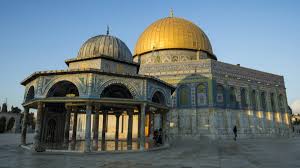
1. The Location
Al-Aqsa Mosque is in the Old City of Jerusalem on the Haram al-Sharif (“Noble Sanctuary”), known in Judaism as the Temple Mount (where Salomon Termple was built 3000 years ago and 1500 before the Mosque)
The whole Haram complex is about 144,000 m² and contains multiple holy sites, including the Dome of the Rock and Al-Aqsa itself.
2. Early Islamic Era
Prophet Muhammad’s Night Journey (Isra and Mi'raj)
According to Islamic tradition, Muhammad was transported from Mecca to “al-Masjid al-Aqsa” (the “farthest mosque”) in one night, then ascended to heaven from the site.
This made Jerusalem the third holiest city in Islam, after Mecca and Medina.
Umayyad Caliphate (late 7th–8th century)
The caliph Abd al-Malik built the nearby Dome of the Rock (~691 CE).
His son al-Walid I (705–715 CE) built or expanded the mosque we call Al-Aqsa.
Over centuries, earthquakes damaged and rebuilt it multiple times.
3. Crusader and Ayyubid Periods
1099 – Crusaders captured Jerusalem and converted Al-Aqsa into a palace for the kings of Jerusalem; part was used by the Knights Templar as headquarters.
1187 – Salah al-Din (Saladin) recaptured Jerusalem, restored the mosque to Islamic worship, and refurbished it.
4. Mamluk and Ottoman Rule
Mamluks (13th–16th centuries) built schools, fountains, and gates around the Haram.
Ottomans (1517–1917) repaired and maintained the mosque; the Sultan Suleiman the Magnificent also restored the Old City walls.
5. Modern Era & Political Tensions
British Mandate (1917–1948): The Supreme Muslim Council oversaw the mosque.
1948–1967: Under Jordanian control, with some restorations.
1967 Six-Day War: Israel captured East Jerusalem, including the Old City.
The Haram al-Sharif remained administered by the Islamic Waqf (a Jordanian religious trust), but Israel maintained overall security control.
21st century:
Al-Aqsa remains a focal point of religious devotion for Muslims worldwide and a flashpoint in the Israeli–Palestinian conflict.
Disputes over access, security measures, and perceived changes to the “status quo” frequently spark protests and violence.
6. Architectural Notes
The mosque is a rectangular prayer hall with a lead-colored dome (unlike the gold Dome of the Rock).
It can hold about 5,000 worshippers inside, with far more in the surrounding plaza during Friday prayers and Ramadan.
Its name, “Al-Aqsa,” means The Farthest, referring to the Qur’anic description in Surah Al-Isra (17:1).
The name "Al-Aqsa" (ٱلْمَسْجِد ٱلْأَقْصَى) literally means "the Farthest Mosque" in Arabic.
1. Origin in the Qur’an
The name comes from a verse in the Qur’an, Surah Al-Isra (17:1), which describes the Prophet Muhammad’s Night Journey (Isra’ wa-Mi‘raj):
"Glory be to Him who took His servant by night from al-Masjid al-Haram (the Sacred Mosque in Mecca) to al-Masjid al-Aqsa (the Farthest Mosque), whose surroundings We have blessed..."
- al-Masjid al-Haram → the Kaaba in Mecca.
- al-Masjid al-Aqsa → understood by Muslims as being in Jerusalem.
2. Meaning of “Farthest”
In 7th-century Arabia, Jerusalem was literally the farthest place of worship associated with the Abrahamic tradition known to the early Muslims.
It was far from Mecca geographically (over 1,200 km) and spiritually linked through earlier prophets — David, Solomon, Jesus.
3. Historical Association
The term Al-Aqsa originally referred to the entire sacred precinct (Haram al-Sharif), not just the current rectangular mosque building.
Over time, the name became associated more specifically with the southern prayer hall in the compound — the structure we now call “Al-Aqsa Mosque” — while the Dome of the Rock became the northern centerpiece.
4. Spiritual Significance
Because of this Qur’anic reference, Al-Aqsa became Islam’s third holiest site after Mecca and Medina.
It was also the first qibla (direction of Muslim prayer) before the qibla was changed to Mecca.