

The Oslo Accords were a pair of landmark agreements between Israel and the Palestine Liberation Organization (PLO) in the 1990s, aiming to lay the groundwork for peace between Israelis and Palestinians.
Here’s a breakdown:
Background
Before Oslo, Israel and the PLO did not officially recognize each other.
The Israeli–Palestinian conflict had been ongoing for decades, with wars, uprisings (intifadas), and disputes over land, refugees, and Jerusalem.
Secret negotiations began in Oslo, Norway in 1993, facilitated by Norwegian diplomats.
Key Agreements
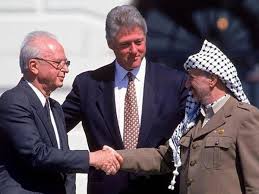
Oslo I Accord (1993)
Signed in Washington, D.C., with
- Yitzhak Rabin (Israel's Prime Minister),
- Yasser Arafat (PLO Chairman), and
- Bill Clinton (U.S. President) present.
Mutual Recognition: Israel recognized the PLO as the representative of the Palestinian people; the PLO recognized Israel's right to exist and renounced terrorism.
Palestinian Self-Government: Established the Palestinian Authority (PA) to govern parts of the West Bank and Gaza for a 5-year interim period.
Phased Approach: Issues like Jerusalem, refugees, settlements, and final borders were postponed for later talks.
Oslo II Accord (1995)
Divided the West Bank into Areas A, B, and C with different levels of Palestinian and Israeli control.
Expanded Palestinian self-rule to more West Bank towns.
Impact and Challenges
Hope: Initially seen as a major step toward a "two-state solution."
Setbacks: Continued violence, expansion of Israeli settlements, political assassinations (including Rabin in 1995), and mutual mistrust undermined the process.
Outcome: The accords did not resolve core disputes, and the peace process stalled by the early 2000s.
Areas A, B, and C divisions from the Oslo II
The Areas A, B, and C divisions from the Oslo II Accord have not been fully respected as originally intended, at least in practice. Here’s what happened:
1. The Original Plan (1995 Oslo II Accord)
- Area A → Full Palestinian civil and security control (major cities like Ramallah, Nablus, Bethlehem, Gaza before 2007).
- Area B → Palestinian civil control, Israeli security oversight (many rural towns and villages).
- Area C → Full Israeli civil and security control (about 60% of the West Bank, including settlements and most open land).
Goal: These divisions were supposed to be temporary (5 years), leading to a final status agreement by 1999.
2. What Happened in Practice
No Final Status Agreement: The peace process stalled after 2000 (Second Intifada), so the “temporary” division became effectively permanent.
Area A incursions:
- Israel still conducts regular military operations inside Area A (e.g., arrests in Jenin, Nablus, Ramallah), which was supposed to be under full Palestinian security control.
- Israel says these are for counterterrorism;
- Palestinians say it violates the accords.
Area B friction: Shared control often leads to clashes over security operations and planning rights.
Area C expansion:
- Israeli settlements and infrastructure have expanded significantly in Area C.
- Palestinians face heavy restrictions on building and movement there, even though Oslo foresaw eventual transfer of some of this land to Palestinian control.
3. Why the Rules Broke Down
- Security concerns: Israel argues it needs to operate anywhere to prevent attacks.
- Lack of trust: Each side accuses the other of violating commitments first.
- Political shifts: Changes in leadership and public opinion in both Israel and Palestinian territories made compromise harder.
- Settlement growth: Increased Israeli presence in Area C has made the original land-for-peace formula harder to implement.
In short: The A/B/C arrangement is still on paper, but in reality the boundaries are porous for Israeli security forces, and Area C has remained firmly under Israeli control far longer than intended.