

The Oslo Accords were a set of agreements between Israel and the Palestine Liberation Organization (PLO) in the early 1990s. They marked the first time the two sides officially recognized each other and agreed to negotiate directly.
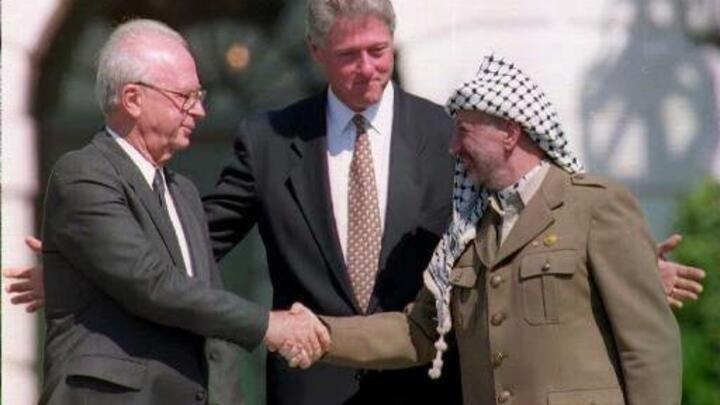
Key Dates and Agreements
1. Oslo I Accord (13/09/1993)
Declaration of Principles on Interim Self-Government Arrangements (DOP)
Signatories:
- Yitzhak Rabin (Israeli Prime Minister)
- Yasser Arafat (Chairman of the PLO)
- Witnessed by U.S. President Bill Clinton
2. Oslo II Accord (28/09/1995)
Israeli–Palestinian Interim Agreement on the West Bank and the Gaza Strip
Created a more detailed plan for self-government and land division.
Oslo I
Mutual Recognition
- Israel recognized the PLO as the legitimate representative of the Palestinian people.
- PLO recognized Israel’s right to exist and renounced violence.
Palestinian Authority (PA)
- Creation of the Palestinian Authority, a temporary self-governing body to manage parts of the West Bank and Gaza.
- Limited autonomy in areas like education, health, policing, and taxes.
Phased Withdrawal
- Israel agreed to gradually withdraw from certain parts of the West Bank and Gaza.
Final Status Negotiations
To be concluded within five years (by 1999), covering:
- Jerusalem
- Borders
- Settlements
- Refugees
- Security arrangements
Oslo II
Divided the West Bank into 3 zones:
- Area A: Full Palestinian civil and security control (main cities)
- Area B: Palestinian civil control, Israeli security control (villages)
- Area C: Full Israeli control (settlements, military zones — about 60% of West Bank)
Criticism and Challenges
🔻 From Palestinians:
- No guarantee of a sovereign state
- Israeli settlement expansion continued
- Final status issues remained unresolved
🔻 From Israelis:
- Ongoing Palestinian violence and terrorism
- Fear of security risks from PA control
🔻 Extremist Backlash:
- 1995: Rabin assassinated by a right-wing Israeli extremist
- Hamas and other Palestinian groups rejected the accords
Legacy of the Oslo Accords
Positive
- First formal Israel–PLO dialogue
- Created PA, which still governs parts of the West Bank today
- Foundation for future peace talks (like Camp David, Roadmap, Annapolis)
Negative
- Final status issues never resolved
- Trust collapsed due to violence and failed expectations
- Many Palestinians saw Oslo as a trap; many Israelis saw it as dangerous appeasement