

The Hebron Massacre of 1929 was a tragic and violent event that took place during a period of intense tensions between Jewish and Arab communities in Mandatory Palestine.
Background:
In the 1920s, Palestine was under British control following the collapse of the Ottoman Empire after World War I.
There were growing nationalist tensions between the Jewish and Arab populations, particularly over issues such as land, immigration, and religious sites.
The Western Wall in Jerusalem, a sacred Jewish site, became a flashpoint for disputes and violence.
The Incident (August 1929):
In late August 1929, rumors and incitement led to widespread violence between Arabs and Jews across Palestine.
In Hebron, a city with a small but ancient Jewish community living among a much larger Arab population, violence erupted.
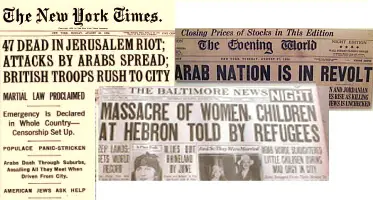
On August 24–25, 1929, Arab mobs attacked the Jewish residents of Hebron.
The attack resulted in the massacre of 67 Jewish men, women, and children.
Many homes and synagogues were looted and destroyed.
The British authorities eventually intervened and imposed martial law to restore order.
Most of the surviving Jews were evacuated from the city afterward.
Aftermath:
The massacre deeply shocked the Jewish community worldwide and led to increased tensions and distrust between Jews and Arabs in Palestine.
The British conducted investigations, and some Arab leaders were arrested and tried.
The Jewish community of Hebron, which had existed continuously for centuries, was effectively uprooted and did not re-establish itself there until decades later, after the 1967 Six-Day War.
The Hebron Massacre remains a significant and painful chapter in the history of the Israeli-Palestinian conflict, symbolizing the deep ethnic and religious divisions of the time.