
The story of the Jewish revolts against Rome is one of the most dramatic and consequential chapters in ancient history, marked by defiance, tragedy, and a legacy that has shaped Jewish identity for nearly two thousand years. These uprisings were not merely military conflicts but profound clashes of religion, culture, and national identity, pitting a small, fiercely independent people against the most powerful empire the world had ever known.
The stage for these revolts was set long before the first rebellion erupted. Judea, the heartland of the Jewish people, had been under foreign rule for centuries, first by the Persians, then the Greeks under Alexander the Great, and finally the Romans.
In 63 BCE, the Roman general Pompey the Great captured Jerusalem, ending the Hasmonean Kingdom and placing Judea under Roman influence. The Romans initially allowed a degree of autonomy, installing local rulers like Herod the Great, whose grand building projects, including the expansion of the Second Temple, masked a reign marked by brutality and a deep unpopularity among the Jewish population. Herod’s death in 4 BCE led to direct Roman rule, with Judea becoming a province governed by Roman procurators, the most infamous of whom was Pontius Pilate. Under Roman administration, tensions simmered as heavy taxation, land confiscations, and repeated disrespect for Jewish religious laws and customs fueled resentment. Incidents such as Pilate’s introduction of Roman standards bearing the emperor’s image into Jerusalem, or Emperor Caligula’s demand to place a statue of himself in the Temple, were seen as intolerable provocations by the Jewish population, who viewed such acts as blasphemous violations of their covenant with God.
By the first century CE, Jewish society in Judea was deeply divided. The Pharisees, who emphasized the oral Torah and personal piety, generally avoided direct confrontation with Rome. The Sadducees, the wealthy priestly elite who controlled the Temple, were more accommodating to Roman rule, seeing it as a means to maintain their power and influence. The Essenes, a ascetic and apocalyptic sect who lived in communities like Qumran, believed in withdrawal from the corrupt world and awaited divine intervention. But it was the Zealots and their even more radical offshoot, the Sicarii, who embodied the spirit of resistance. The Zealots were nationalists who believed that God alone should rule over Israel and that any foreign domination was a violation of divine law. The Sicarii, named for the short daggers (sicae) they concealed in their cloaks, carried out assassinations of Roman officials and collaborators, often in broad daylight, sparking both fear and admiration among the Jewish population.
66 CE - The first and most devastating of the revolts
The first and most devastating of the revolts, known as the Great Revolt, erupted in 66 CE. The immediate spark was a series of provocations by the Roman procurator Gessius Florus, whose heavy-handed rule and theft of Temple funds pushed the Jewish population to the breaking point. When Florus allowed Greek mobs in Caesarea to desecrate a synagogue and massacre Jewish residents, the outrage spread like wildfire. In Jerusalem, the Zealots, led by figures like Eleazar ben Hanania, seized control of the Temple and stopped the daily sacrifices offered for the Roman emperor, an act that was both a religious and political declaration of independence. The Roman garrison in Jerusalem was quickly overwhelmed, and the revolt spread throughout Judea.
The early months of the revolt saw remarkable Jewish successes. At the Battle of Beth Horon, a Jewish force ambushed and destroyed the Roman Twelfth Legion, a humiliating defeat for Rome. The Roman governor of Syria, Cestius Gallus, marched on Jerusalem with a large army but was forced to retreat after suffering heavy losses, a setback that emboldened the Jewish rebels. However, the infighting among the Jewish factions began to take its toll. The Zealots, Sicarii, and moderate leaders like the high priest Ananus ben Ananus were locked in a power struggle, each accusing the others of treachery or weakness. The arrival of the Roman general Vespasian in 67 CE marked a turning point. A seasoned commander, Vespasian methodically reconquered Galilee, defeating the Jewish forces led by Josephus ben Matthias at Jotapata. Josephus, who would later become a Roman collaborator and the primary chronicler of the war, surrendered and was taken to Rome, where he wrote "The Jewish War," a work that remains one of the most important sources for understanding the conflict.
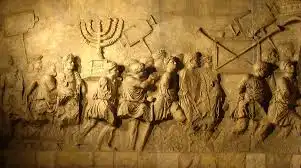
The year 68 CE brought a temporary reprieve for the Jews when Emperor Nero died, and Vespasian paused his campaign to claim the imperial throne. But the respite was short-lived. In 70 CE, Vespasian’s son Titus resumed the siege of Jerusalem with four legions. The city, already weakened by famine and internal strife, held out for five months. Josephus’ accounts describe horrific scenes of starvation, with mothers killing their own children for food and the streets littered with the corpses of the dead. When the Romans finally breached the walls in August 70 CE, they unleashed a wave of destruction. The Second Temple, the spiritual and political heart of Judaism, was set ablaze on the ninth day of the Jewish month of Av, a date that would be commemorated for centuries as Tisha B’Av, a day of fasting and mourning. The Romans looted the Temple, carrying off its treasures, including the golden Menorah, to Rome, where they were paraded in Titus’ triumphal procession, an event immortalized on the Arch of Titus.
The fall of Jerusalem did not mark the end of the revolt. The last Jewish stronghold, the mountain fortress of Masada, held out for another three years under the command of Eleazar ben Yair. According to Josephus, the 960 Zealots defending Masada chose to die by their own hands rather than surrender to the Romans. When the Romans finally breached the walls in 73 CE, they found the defenders dead, their bodies arranged in a final act of defiance. While Josephus’ account of the mass suicide has been debated by historians, archaeological excavations at Masada in the 1960s confirmed the siege and the presence of Jewish defenders, though the exact manner of their deaths remains a subject of scholarly discussion.
The aftermath of the Great Revolt was catastrophic for the Jewish people. Jerusalem was left in ruins, its population decimated by war, famine, and disease. The Temple, the center of Jewish religious life, was destroyed, and with it, the priestly sacrifices that had been the heart of Jewish worship for centuries. The Romans enslaved tens of thousands of Jews, many of whom were sent to work in the mines of Egypt or sold as gladiators. The Jewish population of Judea was decimated, and those who survived were scattered across the Roman Empire, marking the beginning of the Jewish diaspora. The Romans imposed a special tax on Jews, the Fiscus Judaicus, which was used to fund the Temple of Jupiter in Rome, a final humiliation for the defeated people.
115 CE - The second revolt
The second revolt, known as the Kitos War or the Diaspora Revolt, erupted in 115 CE, not in Judea but in the Jewish communities of the diaspora, particularly in Cyrene (modern Libya), Egypt, and Cyprus. The revolt was sparked by a combination of economic grievances, heavy taxation to fund Emperor Trajan’s wars, and anti-Jewish pogroms carried out by Greek and Roman mobs. In Cyrene, the Jewish leader Lukuas-Andreas led a brutal uprising that resulted in the massacre of tens of thousands of Greeks and Romans. The revolt spread to Egypt and Cyprus, where Jewish rebels seized control of cities and carried out further massacres. The Roman response was swift and merciless. Emperor Trajan, who was engaged in a war against the Parthians, sent reinforcements to crush the revolts. By 117 CE, the rebellions had been suppressed, and the Jewish communities in Cyrene, Egypt, and Cyprus were devastated. The Romans banned Jews from returning to Cyrene, and for centuries, there was no significant Jewish presence in the region.
132 to 136 CE - the Bar Kokhba Revolt
The final and most desperate of the revolts was the Bar Kokhba Revolt, which took place from 132 to 136 CE. This uprising was sparked by Emperor Hadrian’s policies, which included the rebuilding of Jerusalem as a Roman colony named Aelia Capitolina, complete with a temple to Jupiter on the site of the Jewish Temple. Hadrian also banned circumcision, a central Jewish religious practice, and confiscated land for Roman veterans. These measures were seen as a direct assault on Jewish identity and religion. The revolt was led by Simon bar Kokhba, a charismatic figure who was proclaimed the Messiah by the renowned rabbi Akiva. Bar Kokhba’s forces initially achieved stunning successes, retaking Jerusalem and establishing a short-lived Jewish state that lasted for two and a half years. Coins minted during this period bore inscriptions such as "For the Freedom of Jerusalem" and "Year 1 of the Redemption of Israel," reflecting the messianic hopes that fueled the rebellion.
However, the Romans were not to be denied. Emperor Hadrian sent twelve legions, approximately 60,000 to 80,000 soldiers, under the command of Julius Severus, the governor of Britain, to crush the revolt. The Romans methodically retook Galilee and then laid siege to Betar, bar Kokhba’s last stronghold, near Jerusalem. After a prolonged and brutal siege, Betar fell in 135 CE, and bar Kokhba was killed. The Romans then carried out a campaign of total destruction, burning villages, executing rebels, and enslaving survivors. According to the Roman historian Cassius Dio, 580,000 Jews were killed, though modern estimates suggest the number was likely between 200,000 and 500,000. The revolt’s failure had devastating consequences. Hadrian renamed Judea "Syria Palaestina," a name chosen to erase its Jewish identity, and banned Jews from entering Jerusalem except on the anniversary of the Temple’s destruction. The Jewish population of Judea was decimated, and the center of Jewish life shifted to Galilee, where the Mishnah, the foundational text of Rabbinic Judaism, was compiled in the decades following the revolt.
Aftermath
The three revolts against Rome had profound and lasting consequences. For the Jewish people, the destruction of the Second Temple and the failure of the Bar Kokhba Revolt marked the end of Jewish political autonomy in their ancestral homeland for nearly two millennia. The Jewish diaspora, which had begun with the Babylonian exile in the sixth century BCE, became a permanent reality, with Jewish communities scattered across the Roman Empire and beyond. Rabbinic Judaism, which emphasized the study of the Torah and the observance of commandments in the absence of the Temple, emerged as the dominant form of Jewish practice, ensuring the survival of Jewish identity and tradition despite the loss of their homeland.
For the Roman Empire, the revolts were a reminder of the costs of imperial overreach and the dangers of provoking subject peoples. The suppression of the revolts came at a significant human and economic cost, and the devastation of Judea deprived the empire of a valuable source of tax revenue. The revolts also had a lasting impact on the relationship between Jews and Christians. In the aftermath of the revolts, the early Christian Church, which was increasingly composed of Gentile converts, began to distance itself from Judaism, a process that contributed to the development of Christianity as a distinct religion and to the growth of anti-Semitic attitudes in the Christian world.
The memory of the revolts has endured in Jewish tradition and culture. Tisha B’Av, the fast day commemorating the destruction of the First and Second Temples, remains one of the most solemn days in the Jewish calendar. Masada, the site of the last stand of the Zealots, has become a symbol of Jewish resistance and defiance, and the story of the defenders’ final act of defiance is a central part of Israeli national mythology. In modern Israel, the Bar Kokhba Revolt is remembered as a heroic, if doomed, struggle for independence, and Simon bar Kokhba is celebrated as a national hero. Streets and schools in Israel bear his name, and the Israel Defense Forces (IDF) have used the story of Masada as a symbol of the importance of never surrendering in the face of overwhelming odds.
The revolts also raise profound questions about the nature of resistance and the cost of defiance. Could the Jews have won if they had been more united or if they had secured foreign allies? Some historians have speculated that if the Jewish factions had been able to overcome their internal divisions and if they had received support from Rome’s enemies, such as the Parthians, they might have been able to hold out longer or even achieve some measure of independence. However, the power of the Roman Empire, with its disciplined legions, superior logistics, and vast resources, made such an outcome unlikely. The revolts were, in many ways, a clash between a small, fiercely independent people and an empire that was determined to assert its dominance at any cost.
The story of the Jewish revolts against Rome is ultimately a testament to the power of faith, identity, and the human spirit in the face of overwhelming odds. Despite their defeat, the Jews of ancient Judea left a legacy that has inspired generations of their descendants to resist oppression and to maintain their identity and traditions in the face of adversity. The revolts may have ended in tragedy, but they also demonstrated the enduring power of a people’s will to survive and to preserve their heritage, no matter the cost.