

1. Fundamental Textual Differences
New Testament (NT):
- Focuses on ethics and spirituality (e.g., "Love your enemies," Matthew 5:44).
- No calls for holy war, slavery, or corporal punishment.
- Slavery is not legitimized (Paul’s letters encourage kindness, Philemon 1:16).
- Easier to align with modern values (human rights, equality) because the text itself does not mandate violence or legal codes.
Quran and Sunna:
- Contains explicit calls to jihad (e.g., Quran 9:5: "Kill the polytheists wherever you find them").
- Legal prescriptions for stoning (hadiths), amputation (Quran 5:38), and slavery (Quran 4:3, 23:6, 33:50).
- Polygamy, unequal inheritance, and supremacy over non-Muslims (Quran 4:11, 9:29).
- Problem: These elements are embedded in the sacred text, making reform theologically fraught.
2. Theological Obstacles: The Quran as the Literal Word of God
Christianity:
- The Bible is inspired but human-authored; reformers could return to Jesus’ core message (love, peace) without contradicting the text.
- Example: Abolition of slavery aligned with NT principles.
Islam:
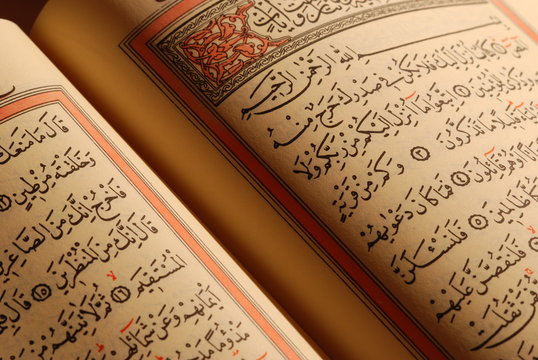
- The Quran is the literal, uncreated, perfect word of Allah, valid for all times.
- No authority to "update" or reject verses, even if they conflict with modern ethics.
- Sunna (Prophet’s life) is also perfect—his wars, executions, and marriages are models to emulate (Quran 33:21).
- Consequence: Reformers must contort interpretations (e.g., calling stoning "contextual") without theological justification.
3. Failed Reform Attempts
Contextual Interpretation:
- Claim: "Violent verses were for 7th-century Arabia, not today."
- Problem: Undermines the Quran’s eternal validity—heretical for traditionalists.
- Arbitrary: Who decides which verses are "contextual"? Reformers pick and choose.
Prioritizing "Peaceful" Verses:
- Claim: Focus on verses like Quran 2:256 ("No compulsion in religion").
- Problem: The Quran is ambiguous—violent and peaceful verses coexist.
- Islamist counter: "Violent verses abrogate peaceful ones" (naskh theory).
Metaphorical Readings:
- Claim: "Beat them" (Quran 4:34) means "leave them."
- Problem: No theological basis for allegory in traditional Islam.
Result: These attempts are workarounds, not solutions. They fail to address the core issue: the text itself.
4. Why Islam Hasn’t Reform Like Christianity
No Central Authority:
- Christianity has hierarchies (Pope, councils) to redefine doctrine.
- Islam is decentralized; traditional scholars resist reform, and reformers are marginalized.
Fear of Apostasy:
- Criticizing the Quran/Sunna risks apostasy charges (punishable by death in some countries).
- Example: Nasr Hamid Abu Zayd (Egypt) and Raif Badawi (Saudi Arabia) were persecuted for critical views.
Political Instrumentalization:
- Authoritarian regimes (Saudi Arabia, Iran) and Islamist groups (Muslim Brotherhood) weaponize traditional Islam to control populations.
- Reform threatens their power.
5. The Way Forward: Can Islam Reform?
For Muslims:
- Embrace critical reading of sacred texts, even if it means challenging dogma.
- Support reformists (e.g., Irshad Manji, Zuhdi Jasser) calling for radical reinterpretation.
- Reject violent laws (stoning, polygamy) in the name of human rights.
- Risk: Accusations of apostasy or treason.
For Non-Muslims:
- Acknowledge the structural problem: It’s not just "misinterpretation" but the text itself.
- Support critical voices (ex-Muslims, liberals) in Muslim-majority countries.
- Pressure Muslim states to uphold human rights, even if it means limiting Sharia.
For Muslim States:
- Separate religion and state (e.g., Tunisia’s secularism).
- Reform education to teach Islam compatibly with human rights.
- Abolish Sharia-based laws violating fundamental rights.
- Challenge: Traditionalists and Islamists will resist fiercely.
6. Conclusion: The Text Is the Problem
- Unlike the New Testaemnt, the Quran and Sunna mandate legal and political systems incompatible with modern ethics.
- Three possible outcomes:
- Stagnation: Islam remains traditionalist; Muslim societies oscillate between authoritarianism and violence.
- Radical Reform: A theological/political upheaval (like Christianity’s Reformation), but unprecedented in scale.
- Fragmentation: Islam splits into traditionalist, reformist, and secular factions, with lasting internal conflicts.
Final Question:
- Can Islam reform without betraying its foundational text?
- Or must Muslims choose between literalism (with its violent consequences) and leaving the faith?
Key Sources for Further Reading:
- The End of Faith by Sam Harris (critique of religious texts, including Islam).
- Islam and the Future of Tolerance by Sam Harris and Maajid Nawaz (debate on reform).
- Leaving Islam by Ibn Warraq (radical critique of traditional Islam).