
The question of who is the "father of wokism" is complex because "wokism"—as a contemporary, often politicized term—does not have a single, clear originator. Instead, it is the culmination of decades of intellectual, activist, and social movements that have critiqued systemic oppression, power structures, and cultural norms. However, we can trace its intellectual and ideological roots to a few key traditions and thinkers who laid the groundwork for what we now associate with "woke" thought. These roots emerge from critical theories of race, gender, class, and colonialism, as well as the social movements that have pushed these ideas into the mainstream.
The closest intellectual ancestors of "wokism" are found in Critical Race Theory (CRT), postcolonial studies, feminist theory, and the Frankfurt School’s critical theory, all of which share a focus on unmasking systemic oppression, challenging dominant narratives, and advocating for structural change. If we were to identify a "father" or founding figures of the ideas that now fall under the umbrella of "wokism," we would need to look at the scholars and activists who developed these critical frameworks, particularly in the 20th century.
Critical Race Theory (CRT) (Derrick Bell, Kimberlé Crenshaw, and Richard Delgado)
Critical Race Theory (CRT) is perhaps the most direct precursor to what is now called "wokism," particularly in its focus on systemic racism and the intersection of race with other forms of oppression. CRT emerged in the 1970s and 1980s in the United States, developed by legal scholars who sought to understand why civil rights gains had not led to racial equality. The movement was pioneered by figures like Derrick Bell, Kimberlé Crenshaw, and Richard Delgado, who argued that racism is not just an individual prejudice but a systemic, structural issue embedded in laws, policies, and institutions. Crenshaw, in particular, introduced the concept of intersectionality in 1989, which highlights how race, gender, class, and other identities intersect to create unique forms of discrimination. This idea is now central to "woke" thought, as it emphasizes the complex, layered nature of oppression and the need to address it holistically.
Derrick Bell, often considered one of the founding figures of CRT, can be seen as a key intellectual father of the ideas that underpin "wokism." His work, such as Race, Racism, and American Law (1973), argued that racism is a permanent feature of American society, and that progress toward racial equality only occurs when it aligns with the interests of white elites—a concept he called "interest convergence." This idea challenges the notion of meritocracy and colorblindness, which are also central targets of "woke" critiques. Bell’s pessimism about the possibility of racial justice within existing systems and his call for radical structural change resonate strongly with the more radical strands of "wokism" that seek to dismantle oppressive systems rather than reform them.
Postcolonial theory (Edward Said, Frantz Fanon, and Gayatri Spivak)
Another major influence on "wokism" is postcolonial theory, which critiques the lingering effects of colonialism on culture, knowledge, and power. Thinkers like Edward Said, Frantz Fanon, and Gayatri Spivak exposed how Western colonialism shaped global hierarchies and how cultural and intellectual domination continues to marginalize formerly colonized peoples. Said’s Orientalism (1978), for example, demonstrated how Western representations of the East were not neutral but served to justify colonial rule and reinforce power imbalances. This idea—that knowledge and culture are not neutral but are tools of domination—is a cornerstone of "woke" critiques of Eurocentrism, white supremacy, and cultural appropriation.
Frantz Fanon, in works like The Wretched of the Earth (1961) and Black Skin, White Masks (1952), analyzed the psychological and cultural effects of colonialism on the colonized, including the internalization of inferiority and the violence of decolonization. His ideas about the need for radical liberation and his critique of assimilationist politics have deeply influenced anti-colonial and anti-racist movements, which are central to "wokism."
Feminist theory (Simone de Beauvoir, Judith Butle)
Feminist theory also plays a crucial role in the development of "woke" thought, particularly through its focus on patriarchy, gender norms, and the intersection of gender with other forms of oppression. Thinkers like Simone de Beauvoir, Judith Butler, and bell hooks have shaped the discourse around gender equality, sexuality, and the social construction of identity. Beauvoir’s The Second Sex (1949) famously declared that "one is not born, but rather becomes, a woman," laying the groundwork for the idea that gender is a social construct rather than a biological destiny. Butler’s Gender Trouble (1990) further developed this idea, arguing that gender is performative—a series of acts that reinforce or challenge societal norms. These ideas are now central to "woke" discussions of LGBTQ+ rights, non-binary identities, and the fluidity of gender and sexuality.
bell hooks, in works like Ain’t I a Woman? (1981) and Feminist Theory: From Margin to Center (1984), emphasized the intersection of race, class, and gender, arguing that feminism must be inclusive of all women, particularly those who are marginalized by multiple forms of oppression. Her work, like that of Crenshaw, highlights the need for an intersectional approach to social justice, which is a hallmark of "wokism."
The Frankfurt School (Theodor Adorno, Max Horkheimer, and Herbert Marcuse)
The Frankfurt School, a group of Marxist critical theorists from the early 20th century, also contributed significantly to the intellectual foundations of "wokism." Thinkers like Theodor Adorno, Max Horkheimer, and Herbert Marcuse critiqued mass culture, authoritarianism, and the ways in which capitalism and modernity produce new forms of domination. Marcuse’s One-Dimensional Man (1964), for example, argued that advanced industrial societies create false needs and suppress dissent, leading to a complacent and conformist population. His ideas about the need for liberation from oppressive systems and his critique of consumer culture resonate with "woke" critiques of capitalism, media representation, and the commodification of identity.
Marcuse’s concept of "repressive tolerance"—the idea that tolerance can be used as a tool of oppression when it allows dominant groups to appear progressive while maintaining their power—is particularly relevant to contemporary debates about "cancel culture" and free speech. His work, along with that of Adorno and Horkheimer, laid the groundwork for critical theory’s focus on ideology, power, and resistance, which are central to "wokism."
The Civil Rights Movement, Black Power Movement, Feminist Movement, LGBTQ+ Movement, and Anti-Colonial Movements (Martin Luther King Jr., Malcolm X, Angela Davis, Audre Lorde, and James Baldwin)
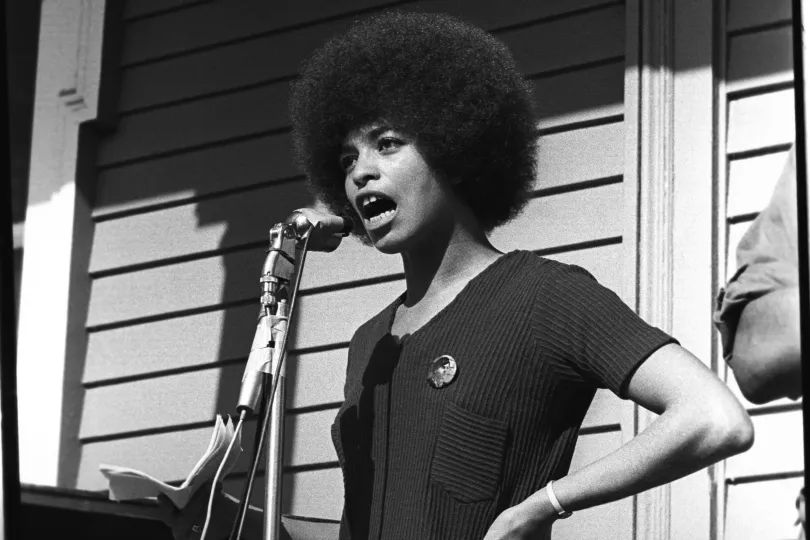
Social movements have also played a pivotal role in shaping "wokism" as we know it today. The Civil Rights Movement, Black Power Movement, Feminist Movement, LGBTQ+ Movement, and Anti-Colonial Movements all contributed to the activist and political dimensions of "wokism." Figures like Martin Luther King Jr., Malcolm X, Angela Davis, Audre Lorde, and James Baldwin were not only activists but also intellectuals who articulated the systemic nature of oppression and the need for radical change.
Angela Davis, for example, has been a leading voice in connecting race, class, and gender in her critiques of prison industrial complex, capitalism, and state violence. Her work, such as Are Prisons Obsolete? (2003), argues that prisons are not solutions to crime but tools of racial and economic control, a perspective that aligns with "woke" critiques of mass incarceration and systemic racism. Similarly, Audre Lorde’s The Master’s Tools Will Never Dismantle the Master’s House (1984) emphasized the need for intersectional, radical approaches to social justice, arguing that oppressed groups cannot use the tools of their oppressors to liberate themselves.
In summary
"wokism" does not have a single father but rather a constellation of intellectual and activist ancestors who developed the critical frameworks that underpin it. If we were to identify the most direct intellectual fathers, we would point to:
Derrick Bell and Kimberlé Crenshaw as the founding figures of Critical Race Theory, which provides the legal and structural framework for understanding systemic racism and intersectionality. Their work is perhaps the closest to a "founding moment" for the ideas that now define "wokism," particularly in its focus on race, law, and institutional power.
Edward Said and Frantz Fanon as the architects of postcolonial theory, which exposed the cultural and psychological dimensions of colonial domination and laid the groundwork for critiques of Eurocentrism and white supremacy.
Judith Butler, bell hooks, and Simone de Beauvoir as the pioneers of feminist and queer theory, which expanded the focus of social justice to include gender, sexuality, and the social construction of identity.
Herbert Marcuse and the Frankfurt School as the critical theorists who analyzed the ideological and cultural dimensions of domination, particularly in the context of capitalism and mass culture.
Ultimately, "wokism" is the product of a long, collective intellectual and activist tradition rather than the brainchild of a single individual. Its roots lie in the struggles for racial, gender, and economic justice that have unfolded over the past century, and its contemporary form reflects the convergence of these critical frameworks in response to ongoing systemic oppression. If there is a "father" of wokism, it is not one person but a lineage of thinkers and activists who have dedicated their lives to exposing injustice and imagining a more equitable world.